Alvan T. Fuller Quotes
The President is asking our business men to economize and become more efficient, while we continue to be the most inefficient and expensive barnacle that ever attached itself to the ship of state.
In one of the harshest self criticisms in Congressional history:
Alvan T. Fuller, U. S. Congressman (*), 1918
Sourced by: Eigen's Political and Historical Quotations


Referring to Arizona Governor Fife Symington III (Republican) who, after winning the governership, declared personal bankruptcy, had his businesses collapse and was indicted for fraud:


In 1964 the treasury secretary asked the president how to sell the proposed budget to Congress:


This quotation pithily summarizes a common problem in politics of describing budgets. In most years there has been a national inflation. If a new budget is, in actual dollars, the same as the previous years or a little more, but the increase is less than the inflation level, the agency will not be able to provide the same level of services as the previous year. Therefore services will be cut and those who are politically in favor of more money for the program legitimately describe this as a “budget cut”. Opponents of larger funding increases, also legitimately describe the funding as a “budget increase”. One side refers to what the money can buy and the other, to the absolute dollars spent. This is an example of the classical ambiguity of political oratory.


An unusual feature of the American governmental budgeting process is that Congress has passed a law limiting the amount of debt that the United States can maintain. When there is deficit financing, the law limiting the debt has to be changed periodically as the nation approaches the debt limit. Partisan politicians often take advantage of the fact that the debt limit must be passed and hold the passage hostage to obtaining something they want. The reality is that when Congress passed the previous budgets, they determined what the debt would have to be later. So they have already voted to exceed the budget ceiling. But the requirement of doing it in a second forum allows more pressure to be placed on the administration and the other party’s Congress members. While this process is ongoing, many people in the world are worried and often terrorized by the prospect of the debt ceiling not being passed, in which case the United States would have to default on its obligations—not pay interest, contractors, retirements, salaries, etc. Hence the admonition that the debt ceiling should never be a part of the budget negotiating process by most responsible statesmen and women. But the mist partisan of the politicians want to play politics with the debt ceiling precisely because the stakes are so high and they can get both headlines and leverage.
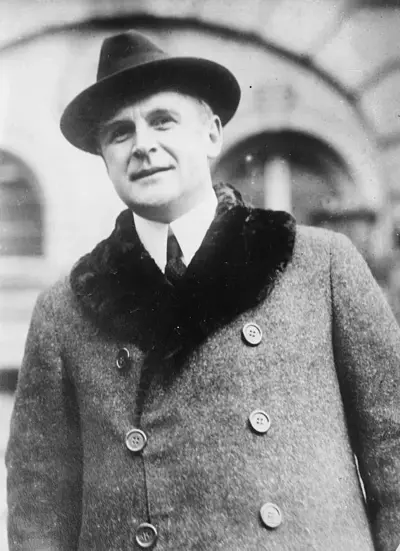
Alvan Tufts Fuller was an American businessman, politician, art collector, and philanthropist from Massachusetts. He opened one of the first automobile dealerships in Massachusetts, which in 1920 was recognized as "the world's most successful auto dealership", and made him one of the state's wealthiest men. Politically a Progressive Republican, he was elected a member of the Massachusetts House of Representatives, was a delegate to the Republican National Convention in 1916, and served as a United States Representative from 1917 to 1921.
