Frank Murphy Quotes
The power of the state lawfully to control the religious and other activities of children is greater than its power over similar activities of adults
Frank Murphy, 1890-1959, Governor of Michigan (Democrat), U. S. Attorney General, U. S. Supreme Court Justice, Dissent, Prince v. Massachusetts, 1944
Sourced by: Eigen's Political and Historical Quotations


The remainder of the cabinet abandoned the plan in the face of the Bishops’ opposition. When the public found out, it became a cause celebre. Browne resigned, and the Protestants of Northern Ireland argued that this was an example of Catholic religious control of the Southern Irish government. See the quotation of President John Aloysius Costello.

The Supreme Court found that the U.S. Constitution protects this

The then current example was with same sex marriage. Some people who claimed that their religion declared same sex marriage as a sin and prohibited their aiding and abetting that activity. As a result, they claimed that their right of religious freedom allowed a county clerk to refuse to issue the marriage license or a hotel to refuse to allow a gay couple to rent their facility for a wedding, or a retail store to refuse to sell the couple bedding.
In the American system, we do not oppose any religion. We do oppose the right of any religion to use the power of the state and governments to compel or use government resources to promote or subsidize their religion. Other countries have established churches or a national religion. In that sense, some religions perceive America objects to their religion because we do not make it our established religion. Opposing prayer in public schools is not opposing prayer. It is only opposing prayer in that specific context where all payers are paying including the non believers in that particular religion.

Religious organizations may become grantees or contractors to perform various social services—along with other non-profit organizations provided, that they do not comingle the government contract money with the general church funds, that the services that are provided are provided to all regardless of religious beliefs, and that there is no religious ceremony or indoctrination in the provision of services. Catholic Charities and the Salvation Army are two of the larger religious organizations that receive government funds for general service provision. Those religions who do not want Federal Auditors reviewing their use of the money or who insist that prayer is a necessary aspect of the social services are the ones who have trouble and accuse the government of being hostile to religious social services.


This is a critical quotation on the government establishment of religion issue. There are a few people who have argued over the years that the Founding Fathers and their culture was religious and where they were careful to avoid favoring one religion over another, they did NOT intend to put atheism on the same equal plane as religion as far as government action is concerned. However, some of the Founding Fathers were atheists, and some others like John Adams were deists—they believed in a God but not in the Trinity or in Judaism or any organized religion. So this quotation makes it clear that the First Amendment does NOT favor religion over non religion or secularism. Atheism must be on an equal footing but not on a higher plane.
While this principle is very clear to us today, and was to the people who originally ratified The Constitution, there were many attempts by Christian groups to establish a privileged position for Christianity. For example, for years the Sunday Sabbath was legally enforced by unconstitutional Blue Laws that prohibited businesses from operating on the Christian Sabbath and prohibited activities that compete with Sunday church attendance. Supreme Court Justice Story even argued that the First Amendment allowed Christian religious supremacy and Cooley wrote this to refute Story’s now discredited doctrine.


Note that in addition to getting rid of the authority of the King, New York—over a decade before the Bill of Rights and the First Amendment, provided for a ban on an established church or favoring one Christian sect over another. Even then New York was a multi religious and multi ethnic society with its strong Dutch tradition along with the English tradition. New York did not go as far as the First Amendment would do later in terms of freedom of religion. NY only mentioned Christian sects. However they did implement separation of church and state and an establishment clause. See {621429} for another clause that ensures separation of church and state.


Bishop Ames had been appointed by the war department to take charge of all the Christian churches in the Southern states as they were defeated. The reason is that most Southern clerics were advocates of the rebellion. However many Northern churches, especially those in border states also contained ministers who were not only preaching treason but also aiding the Southern cause. The President thought that the War Department’s order gave Ames authority over all churches where the minister aided the rebellion. So he wrote to Ames limiting the authority. After the President was assured that Ames authority would only extend to Southern churches that had been in the rebellion, Lincoln allowed Ames to appoint ministers and control churches. This is the only time in American history that the Federal government actually controlled churches directly.


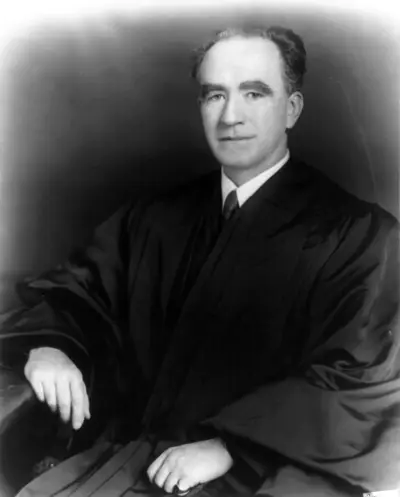
William Francis Murphy was a Democratic politician and jurist from Michigan. He was named to the Supreme Court of the United States in 1940 after a political career that included serving as United States Attorney General, Governor of Michigan and Mayor of Detroit. He also served as the last Governor General of the Philippine Islands and the first High Commissioner of the Philippines.
