Robert H. Jackson Quotes
Limits begin to operate whenever activities begin to affect or collide with liberties of others or of the public. Religious activities which concern only members of the faith are and ought to be free -- as nearly absolutely free as anything can be. But beyond these, many religious denominations or sects engage in collateral and secular activities intended to obtain means from unbelievers to sustain the worshippers and their leaders. They raise money not merely by passing the plate to those who voluntarily attend services or by contributions by their own people, but by solicitations and drives addressed to the public by holding public dinners and entertainments, by various kinds of sales and Bingo games and lotteries. All such money-raising activities on a public scale are, I think, Caesar's affairs, and may be regulated by the state so long as it does not discriminate against one because he is doing them for a religious purpose and the regulation is not arbitrary and capricious, in violation of other provisions of the Constitution.
Robert Houghwout Jackson, 1892-1954, Chief Prosecutor, Nuremberg War Crimes Tribunal, U. S. Attorney General (Democrat), U. S. Supreme Court Justice, Concurring Opinion. Prince v. Massachusetts, 1944
Sourced by: Eigen's Political and Historical Quotations


The then current example was with same sex marriage. Some people who claimed that their religion declared same sex marriage as a sin and prohibited their aiding and abetting that activity. As a result, they claimed that their right of religious freedom allowed a county clerk to refuse to issue the marriage license or a hotel to refuse to allow a gay couple to rent their facility for a wedding, or a retail store to refuse to sell the couple bedding.


The remainder of the cabinet abandoned the plan in the face of the Bishops’ opposition. When the public found out, it became a cause celebre. Browne resigned, and the Protestants of Northern Ireland argued that this was an example of Catholic religious control of the Southern Irish government. See the quotation of President John Aloysius Costello.


Bishop Ames had been appointed by the war department to take charge of all the Christian churches in the Southern states as they were defeated. The reason is that most Southern clerics were advocates of the rebellion. However many Northern churches, especially those in border states also contained ministers who were not only preaching treason but also aiding the Southern cause. The President thought that the War Department’s order gave Ames authority over all churches where the minister aided the rebellion. So he wrote to Ames limiting the authority. After the President was assured that Ames authority would only extend to Southern churches that had been in the rebellion, Lincoln allowed Ames to appoint ministers and control churches. This is the only time in American history that the Federal government actually controlled churches directly.

Opponents of the strict separation of church and state use this quotation to support their view. However, Story herein describes public sentiment, not what was passed and ratified in the Constitution and Bill of Rights. See {614309} and {614310} for his statements from the same work that show that there was no question in his mind but that church and state are separated by the Constitution and the First Amendment.

This may just have been a note to himself of a draft that he decided not to send. As with today, the people who would feel aggrieved by not being allowed to have Congressional Chaplains are much more passionate about the issue than the those who see Chaplains as unconstitutional. Thus Chaplains remain.


The Supreme Court found that the U.S. Constitution protects this


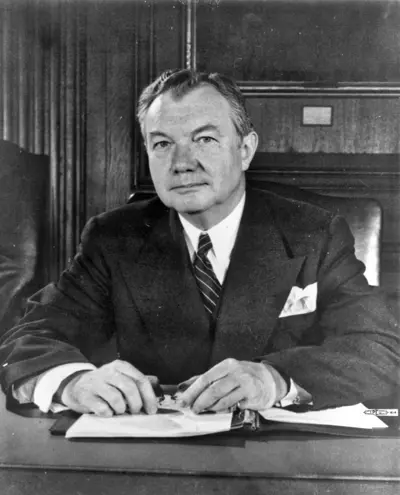
Robert Houghwout Jackson was an American attorney and judge who served as an Associate Justice of the United States Supreme Court. He had previously served as United States Solicitor General and United States Attorney General, and is the only person to have held all three of those offices. Jackson was also notable for his work as Chief United States Prosecutor at the Nuremberg trials of Nazi war criminals following World War II.
