Andrew Jackson Quotes
The planter, the farmer, the mechanic, and the laborer... form the great body of the people of the United States, they are the bone and sinew of the country men who love liberty and desire nothing but equal rights and equal laws.
Jackson, Andrew. "Veto Message." 10 Jul. 1832. A Compilation of the Messages and Papers of the Presidents, edited by James D. Richardson, vol. 2, Bureau of National Literature, 1897.


Hunting and fishing had been much restricted to aristocrats for whom it was a sport. But for common people it was part of subsistence. Just like so many corporations and wealthy people end up paying lower tax rates than the average person in modern American society, in Holland then it was the aristocrats who paid little or no taxes. And much of the tax revenue went to provide them with an opulent lifestyle. Ending their tax exemptions and their subsidies, would lower taxes on everyone else. And democracy would give the people control over the government. Daendels had in earlier years fled to France when his first Dutch revolutionary efforts failed and he had a price on his head. He was in Paris during the French Revolution and was an enthusiastic supporter. For his support and with his military experience not associated with royalty, he was made a General of the Revolutionary French Army. When the Dutch Patriots tried again to revolt, the new French Government took their side and sent Daendels to Holland at the head of a small French Army to protect the Patriots. This was his position when he issued this proclamation to the great distress of William V and his supporters.


What the Supreme Leader did not understand was that the very books that he recommended to see the faults of America were the very instruments that influenced the American reformers to change and improve America. And the lesson he missed is that he would not allow authors to heavily criticize the current Iran and have a wide audience so that Iran could improve. His examples were very well chosen. The lesson is the wrong one however.

This fascinating quotation is very frequently quoted out of context. For example even in modern times some Southern slavery apologists quote this passage stating that Adams saw no moral difference between slavery and employment of the lower classes. And anti-capitalists have claimed that this was an attack on capitalism as no better than slavery for many workers. Neither is true. The debate was on the head taxes that states should pay to the central government. Southerners were claiming that they should not have to pay per person taxes on slaves. Adams position was that they should pay in that there is no practical difference in the work and working conditions very often. If slaves should be exempted from the head tax, so should the poor, lower class workers like the fisherman in New England. He always maintained at huge moral difference between a poor free worker and a slave even thought their working conditions might be similar.


The only publication with a full time Poverty beat

This is a fascinating historical quotation. Karl Marx and Friedrich Engels wrote The Communist Manifesto in 1848 in England and in less than 40 years, American politicians were already in fear of the doctrine. Communism had one of the fastest spreads of any ideology. By 1886 we already see the beginnings of a Red Scare. At the time, most laws were designed to protect the wealthy and the middle class, and many discriminated against workers and the poverty stricken.


Despite opposition of the dominant Communist Party, she had been elected 7 times in a row. She was one of the few non-communist deputies.

This was the first use of the word “socialism”.


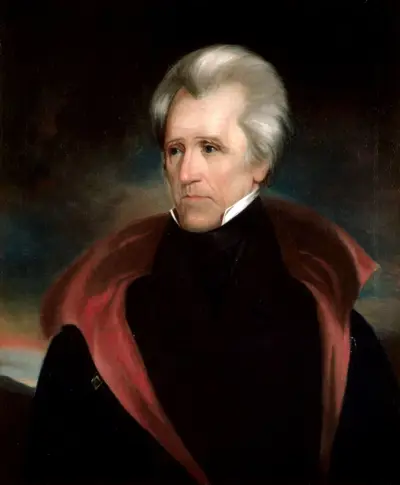
Andrew Jackson was an American lawyer, soldier, and statesman who served as the seventh president of the United States from 1829 to 1837. Before being elected to the presidency, Jackson gained fame as a general in the United States Army and served in both houses of the U.S. Congress. An expansionist president, Jackson sought to advance the rights of the "common man" against a "corrupt aristocracy" and to preserve the Union.
