James Baird Weaver Quotes
If you want to prevent communism in this country, if you want to do away with labor troubles, pass laws here which shall be equal in their bearing upon all classes. Repeal your class laws
This is a fascinating historical quotation. Karl Marx and Friedrich Engels wrote The Communist Manifesto in 1848 in England and in less than 40 years, American politicians were already in fear of the doctrine. Communism had one of the fastest spreads of any ideology. By 1886 we already see the beginnings of a Red Scare. At the time, most laws were designed to protect the wealthy and the middle class, and many discriminated against workers and the poverty stricken.
James Baird Weaver, 1833–1912, U. S. Congressman (Greenback Party, IA), Twice Presidential Candidate (Greenback Party and then The People’s Party (Populists), 1886
Sourced by: Eigen's Political and Historical Quotations


In 1902 there was a major coal and railroad labor crisis. The owners and operators refused to negotiate or bargain with labor: This quotation is very famous because it is an iconic picture of the views and attitudes of the large industiralists at the turn of the 20th Century. More than opposing labor unions, they actually believed that God had selected them to run the economic and business affairs of the country if not the world. It was their Christian values and paternalism that the workers should look to in order to determine the rights and priviliges of the working man or woman. This upper class attitude was one of the major reasons that class warfare broke into the open. Ironically, there was not much difference between the attidudes of the industiral leaders and the notions of fudalism.


The only publication with a full time Poverty beat

At the time, it did seem impossible that labor and capital would ever have harmonious relations. But the notion that slavery would solve the problem is as preposterous as anything ever entered into the American political dialogue. But there were many in the South, and some in the North, who actually believed it. Even 150 years later, while labor and capital relations were much better than pre Civil War, they still could not be described as “harmonious” or “friendly”.


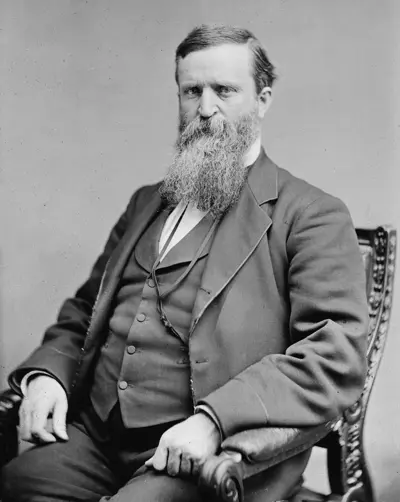
James Baird Weaver was a member of the United States House of Representatives and two-time candidate for President of the United States. Born in Ohio, he moved to Iowa as a boy when his family claimed a homestead on the frontier. He became politically active as a young man and was an advocate for farmers and laborers. He joined and quit several political parties in the furtherance of the progressive causes in which he believed. After serving in the Union Army in the American Civil War, Weaver returned to Iowa and worked for the election of Republican candidates. After several unsuccessful attempts at Republican nominations to various offices, and growing dissatisfied with the conservative wing of the party, in 1877 Weaver switched to the Greenback Party, which supported increasing the money supply and regulating big business. As a Greenbacker with Democratic support, Weaver won election to the House in 1878.
