Ezra Pound Quotes
The phase of the usury system which we are trying to analyze is more or less Patterson's perception that the Bank of England could have benefit of all the interest on all the money that it creates out of nothing. ... Now the American citizen can, of course, appeal to his constitution, which states that Congress shall have power to coin money or regulate the value thereof and of foreign coin. Such appeal is perhaps quixotic.
Pound, Ezra. Social Credit: An Impact. Stanley Nott, 1935, p. 12.


The ‘Fed’ refers to the Federal Reserve Board, the strength of which lies in its independence from politics. Some, however, believe that there should not be any entity that performs a major function in our society which is not accountable to the Executive Branch or the Congress or both.

America had a difficult early history with money—especially paper money which had been issued by private banks but were trusted by few. Paper money had for the first time had been issued by the Federal Government during the Civil War. Many saw it as a wartime measure but not a good practice to follow. Garfield, along with many other leaders thought that it was not constitutional for Congress to issue paper money. Others prevailed as the need for a lighter and more practical form of currency was necessitated by a growing economy. Coins for large transactions between businesses especially was very awkward when chests of coins had to be delivered to pay for cattle, produce or manufactured goods at the wholesale level.


See {583710} for his grandchild’s variation.

In June of 1850, a bipartisan group of Southern politicians met in Nashville, TN for the purpose of organizing strategy and tactics to ward off and defeat the growing aggressiveness of Northern politicians and other leaders in trying to abolish slavery. They issued an address to the people. This is one of the clearest statements of the position of most of the Southern Politicians on the increased efforts to abolish or curtail slavery. They felt that a deal had been made by the founding fathers and the first Congress not to deal with the slavery issue, and that deal must be honored in perpetuity. Most Northerners agreed that a deal had been made, but it was not binding forever—that a Congress could not limit the scope of a future Congress except via a Constitutional Amendment. The deal on Slavery was a deal not to address it for a while. It was not a deal to accept the Southern point of view. And none of it was written into the Constitution because opinion was even then split and a majority could not be mustered for a compromise that would write legal slavery into the Constitution. But many Southerners believed that its absence implied that it could not be addressed by the government. They demanded the right of their states to choose slavery if they so wished. Time was not on the side of the South and the Southerners who insisted on State’s Rights regarding slavery opposed States Rights for Northern States who wished to disallow fugitive slaves to be returned to owners. The more fugitive slaves there were, the more hypocritical the Southern position became as they needed Federal preemption on the issue of Fugitive Slaves, else slavery would end by escape and non-return of slaves.


In WWI Congress had passed a law that prohibited anyone from undermining or interfering with the war effort. The defendants had passed out anti-war literature to young men heading for military service. The court then overlooked the First Amendment and came up with a strange logic where the “clear and present danger” was the test of whether the First Amendment would apply. The anti war pamphleteers went to jail. Today, we look back on this and find it very surprising but this is yet another example of erosion of freedom and civil liberties when the nation is at war. By the 1950s, the Supreme Court had reversed itself and the First Amendment was restored to its original intent.

What was to become the 14th Amendment was being discussed. Several of the most radical Republicans drafted language that would allow Congress to make any law regarding life, liberty or property, so that they could be sure that the States would not make their laws in a discriminatory manner. However, Hotchkiss and the majority wanted to be sure the laws were not discriminatory but they didn’t want Congress to have the power to make any law regarding life, liberty and property for every state. The current version of the 14th Amendment just prohibited discrimination in laws, not empowering the Federal Government to override the state governments in most important areas.


The Constitution sets the majority of each house as a quorum in order to conduct any business. Minorities, in order to obstruct proceedings, would often refuse to answer their names when a quorum call would made even though they were present in the House, Therefore they claimed they could not be counted towards a quorum. In those days there were always absences due to illness, transportation, family emergencies and the like. So the majority had to have most of its members on the floor at all times if the minority wanted too obstruct. The minority claimed it was their right under the Constitution, Reed said that interpreting the Constitution that way was tantamount to suicide for the House. He then changed the rule, and simply counted as present any member who was observed to be present, whether he answered a quorum call or not.

The very act of printing money created a debt—at the time and until the Nixon Administration which went off the gold standard—the government owed the gold or silver and the spicie—the printed money—was a promissory note.


Jefferson was of the opinion that a central bank was unconstitutional and that it was a great economic danger to the nation, a view also held later by President Andrew Jackson.


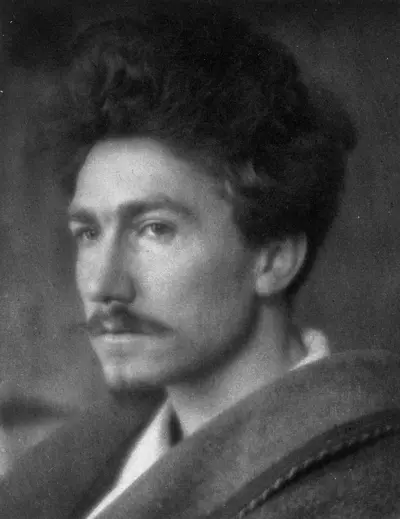
Ezra Weston Loomis Pound was an expatriate American poet and critic, a major figure in the early modernist poetry movement, and a fascist collaborator in Italy during World War II. His works include Ripostes (1912), Hugh Selwyn Mauberley (1920), and his 800-page epic poem, The Cantos (c. 1917–1962).
