Lawrence B. Lindsey Quotes
Current money laundering enforcement practices are the kind of blanket search that the writers of the Constitution sought to prohibit.
Lawrence B. Lindsey, Governor, U. S. Federal Reserve Bank (Republican), The Financial Times, 1999
Sourced by: Eigen's Political and Historical Quotations


The Presidential election of 1800 produced a crisis even greater than that of 2000. There was an Electoral College tie between Thomas Jefferson and Aaron Burr—both of the same party, Democratic Republicans. The Federalist Party led by President John Adams had been totally rejected by the voters and Adams was in third place. However, the Federalists saw an opportunity of maintaining the Presidency anyway. The Constitution threw the election into the House of Representatives with each State delegation having a single vote. In the House, the Federalists had parity with Jefferson’s party which resulted in 35 tie votes. Finally, Congressman Bayard, the sole Congressman from Delaware, withheld his vote on the 36th ballot, thereby electing Thomas Jefferson of the opposition party. His reason was:


The two law enforcement officers had testified that they arrested demonstrators who had “come to break the law” and had not at that point broken any laws.

Responding to suggestions that drug traffickers be summarily executed:

Many politicians were arguing that giving the intelligence agencies more power to wiretap, bug and hack into personal communications despite the 4th Amendment’s strictures argued that the public was in rational fear of terror attacks and had a right to be protected.

The Chief Justice at the time was an ultra-conservative judge, who together with his 8 colleagues—all conservative—had blocked much of the democratic and progressive legislation that the Congress had passed. FDR had a much different legal and philosophical view of the Constitution than the Chief Justice, and the court would declare much of his New Deal legislation, passed in the emergency of the Great Depression, unconstitutional. Almost all of those “unconstitutional” things were years later passed again and this time a more modern court found they were Constitutional.

The president was asked if he supported the Supreme court's school desegregation decision:


In the economic meltdown of 2008 and the aftermath, there were so many criminal violations of law in the financial industry that even the Democratic administration of Barack Obama chose not to jail the violators but to levy some large token fines albeit ones which were very affordable for the institutions who had to pay them—in many cases paying them with money made as a result of profits on no-interest money they received in bailouts after the 2008 Meltdown.

Senator Church was the chairman of the committee. It’s reports (14 in all) are the most extensive documentation of U. S. intelligence ever compiled.

Snowden, was a contract worker for Booz Allan assigned to the National Security Agency (NSA). He felt that some of the NSA activities were illegal and unethical and tried to complain to NSA officials who rebuffed him. Despite the fact that he had signed an agreement not to do so, he copied many critical, classified documents that exposed much of the NSA activities that the NSA officials had denied existed—including lying under oath to the Senate. He then made many of them public, violating his oath, breaking the law, and opening up an entire area of government spying which most Americans knew nothing about and about which senior government officials had lied under oath to Congress. They of course wanted to prosecute Snowden who had told the truth, while they had lied. For many Americans, this became a moral and ethical conundrum.

Greenspan was not the amoral fool that this quotation makes him seem. Despite the fact that he was the most important financial officer of the country, he had an ideological faith that a free market was self-corrective in a democracy. The financial industry would police itself he believed. He also trusted the self interest of the financial corporations to restrain them from getting too greedy -- {637989}. He and many others were wrong and most Americans paid the price.

Jefferson was of the opinion that a central bank was unconstitutional and that it was a great economic danger to the nation, a view also held later by President Andrew Jackson.


This is rarely discussed by journalists—namely that the Constitutions which gives them so much immunity and freedom from regulation, allows anyone to call him/herself a journalist, and there are no qualifications other than what individual organizations choose to impose. The same incidentally is true of politicians.


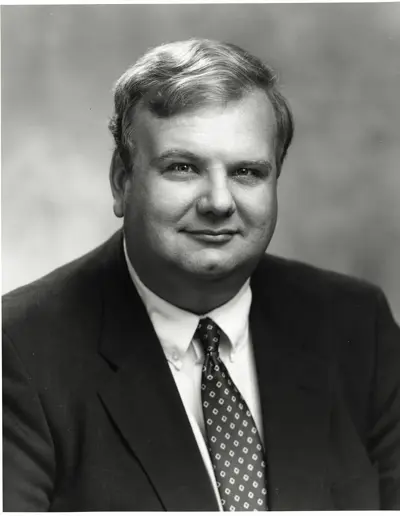
Lawrence B. "Larry" Lindsey is an American economist. He was director of the National Economic Council (2001–2002), and the assistant to the president on economic policy for the U.S. President George W. Bush. He played a leading role in formulating President Bush's $1.35 trillion tax cut plan, convincing candidate Bush that he needed an "insurance policy" against an economic turndown. He left the White House in December 2002 and was replaced by Stephen Friedman after a dispute over the projected cost of the Iraq War. Lindsey estimated the cost of the Iraq War could reach $200 billion, while Defense Secretary Donald Rumsfeld estimated that it would cost less than $50 billion.
