Walter H. Judd Quotes
The people will turn to us [the Republicans] and the country will be saved.
Walter H. Judd, 1898-1994, U. S. Congressman (Republican, MN), 1960 Republican Convention Keynote Address, Chicago, IL, July 24, 1960
Sourced by: Eigen's Political and Historical Quotations

Republican Party primary elections had become very contentious. The radical right and the Tea Party, though a minority of the party, had the power to destroy almost any Republican candidate’s chances. So those Republican political candidates were forced to pander to the extreme right and then try and backtrack to the center for the general election. As a result, few people believed the statements of Republican office seekers as no one knew what they really believed including members of their own party, Bush, no longer running for any political position, found himself with much more credibility and influence in the party than those who were running for office. The problem of appealing to party extremes was not unique to the Republicans at that time, but the degree and extent was unprecedented accounting for the distrust.


Abraham Lincoln was the only third party candidate to win the presidency in U.S. history. However, when he was nominated, there was little conviction among Republicans that a third or fourth party could actually win:. Lincoln's primary opponent, William H. Seward


On why he joined the Republican party:

In 1989 Russia held contested elections for the first time since the 1917 revolution. Numerous incumbent party leaders lost.

On supporting a Black third-party candidate for Mayor of Chicago, while ignoring the regular Democratic nominee, Richard M. Daley:


Complimenting FDR's assistant just after the Roosevelt 1932 presidential victory:. Moley's prediction was amazingly accurate.

Democratic Speaker of the Oklahoma House Jim Barker was so heavy-handed that his own party members combined to unseat him:


What is particularly interesting in this quotation is her use of the term “untried methods”. To most conservatives of any party “untried methods” connotes something bad and to be avoided. Yet to Mrs. Roosevelt and her husband, along with the New Dealers and many other Democrats, viewed “untried methods” as a virtue and a President willing to use untried methods and experiment was to them dangerous and inadequate for the modern world. “Tried and true” approaches are fine as long as they work and the nation is not facing a new situation. Franklin Delano Roosevelt, assuming the Presidency in the midst of the Great Depression realized that President Herbert Hoover had tried all the “tried and true” methods and was an excellent administrator. Yet the nation was in mortal crisis. So the Roosevelts and the New Dealers tried a number of solutions that had never before been attempted—Social Security, Closing aA(the)ll banks and stopping foreclosures, the CCC, WPA are just a few. Some did not work; some were declared unconstitutional and we will never know whether or not they would have been effective, and some were so effective that they are now considered “tried and true” like Social Security.

The Republicans had broken off from the Whig Party and started a new one.

Political Parties go through transformations. In the 1950s the Republican Party had a core that was viciously attacking opponents and calling them Communists and traitors. In the early 21st century, their concern for the National Interest again was dwarfed by the desire to win and hold power, only this time intentional gridlock was added to the slanders. The Democrats have gone through unpatriotic ethical lapses as well. Parties are dynamic and change.
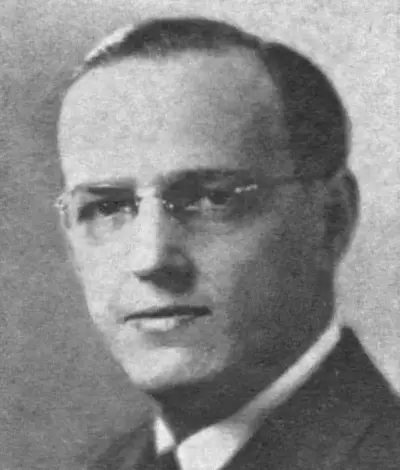
Walter Henry Judd or I-te Chou, was an American politician and physician, best known for his battle in Congress (1943–63) to define the conservative position on China as all-out support for the Nationalists under Chiang Kai-shek and opposition to the Communists under Mao Zedong. After the Nationalists fled to Formosa (Taiwan) in 1949, Judd redoubled his support.
