Thucydides Quotes
The only sure basis of an alliance is for each party to be equally afraid of the other
Thucydides, c. 460 BC -c. 400 BC, Ancient Greek Historian, History of the Peloponnesian War, Book 3
Sourced by: Eigen's Political and Historical Quotations


Mexico was having a dispute with Guatemala and threatened invasion of that country. Blaine warned Mexico against it.


Al Qada and Taliban insurgents fighting in Afghanistan had a sanctuary for training and resupply in the rugged mountains of Pakistan near the Afghan border. Many American military and policy makers believed that we did need Pakistan to close down the sanctuaries and lines of supply if the war was to end. However, the Pakistanis, as Mr. West stated, extracted much from the United States while at the same time, not only refusing to try to control their frontier, but several elements of the Pakistani government were actually assisting the Taliban and Al Qada while taking U. S. Military Aid to suppress them.


At the time, he was president of a de facto Puppet state of the soviet Union. However, many Afghans paid him no heed, and attacked Russians and their assets in Afghanistan with the object of driving the Russians out which they finally did.

Shahin’s empire which he conquered for Khosrow II comprised all of the Middle East into parts of India. The Byzantine Roman Empire controlled everything from Constantinople to the West. They were the two “superpowers” of the day. It seemed to Shahin that no empire could ever be greater, but that is the common hubris of siperpowers.


Nixon is responding to Ted Koppel’s observation that Nixon wrote in his book that Israel is of no strategic value to the US and yet it continues to support Israel.


He coined the term “Shiite Crescent” in this quotation.
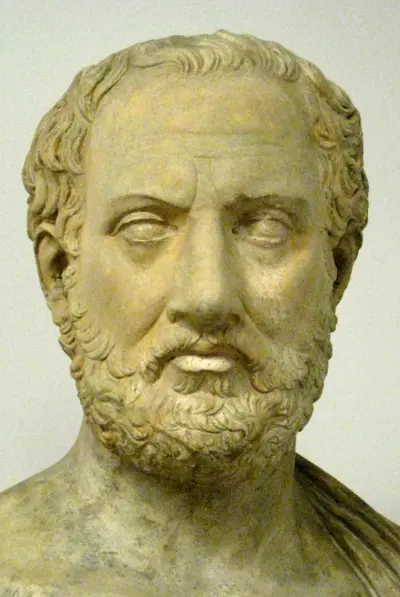
Thucydides (/θjuːˈsɪdɪdiːz/; Ancient Greek: Θουκυδίδης Thoukūdídēs [tʰuːkyːdídɛːs]; c. 460 – c. 400 BC) was an Athenian historian and general. His History of the Peloponnesian War recounts the fifth-century BC war between Sparta and Athens until the year 411 BC. Thucydides has been dubbed the father of "scientific history" by those who accept his claims to have applied strict standards of impartiality and evidence-gathering and analysis of cause and effect, without reference to intervention by the deities, as outlined in his introduction to his work.
