Stephen Lucius Gwynn Quotes
… the obstacles to union in the main are ideals, symbols, pretenses or pretensions, and prejudices: and no one who knows Irish human nature will underrate their stubbornness.
Stephen Lucius Gwynn, 1864–1950, Irish journalist, Protestant Nationalist Politician, Member of the British Parliament, “Ireland, One and Divisible”, Foreign Affairs, December 1924
Sourced by: Eigen's Political and Historical Quotations


He was addressing the Conservatives of Ulster, the Northern Ireland province that was the center of the Orangemen movement of Irish Protestants who were fighting to retain 'Protestant Ascendency' -- which was the social, political and cultural domination of the Protestants (the minority) over the Catholics (the majority). This was best achieved by keeping Ireland a part of Great Britain as opposed to having Ireland as a separate, independent country.


The then Vice President was accosted on the train by southerners who believed that he was on his way to his home state of Tennessee to persuade the legislature not to secede from the union. Amid cries to hang him and after he was punched by one of the mob, ex-Senator Wigfall—the man who had received the surrender sword at Sumter, who was also on the train, persuaded the crowd to hear Johnson out. Johnson thus began his speech which was potentially for his life, but never wavered from his view that secession was a mistake. Most of the crowd calmed down and as the train pulled out, they let him go though there were still a few shouts for “hanging.” There was no secret service protection for the President or vice President at the outbreak of the Civil War. Pinkerton had organized some informal protection for the President and thwarted some plots, but it was the Vice President who was attacked first. And there was not sufficient protection to prevent Lincoln’s assassination.

Sadova was a major battle where the Prussians defeated the Austrians. It was known to all Germans as historically key to developing a German nation.


He was particularly referring to the reigns of Queen Elizabeth I and James I.

Independence and Free Trade the two issues closest to his heart.
There was no Catholic university in Ireland at the time. Unlike England where Catholic students attended both Catholic and Protestant schools, the Irish Priests were opposed to Catholic young men attending Protestant schools. See {617782} for the view of a leading academic of the era.
a lower class Catholic area of Ireland

He had been exiled to the United States.
He had been exiled to the United States.


The Daily Mail was a very conservative newspaper which supported English Fascist Oswald Mosley and his Blackshirts and wrote articles favorable to Mussolini and Hitler before the war. There was a small but powerful part of English Aristocracy who were pro German and pro Fascist including the King, Edward, Duke of Windsor {584507} who was persuaded to abdicate and relegated to the Bahamas where his views were not so public. The Daily Mail catered to that part of the English Aristocracy. See also {623171}

The English at the time ( and some even today) did not consider England part of Europe.

This was a common view of Southern leaders. Society had to be monolithic culturally. In the North, the constant immigration from the world over made pluralism much more normative. However, the vast majority of the North opposed slavery and believed that slavery and free labor could not coexist. So the Southern argument on that point was turned on them, and the monolithic views of the South has constantly eroded and become more tolerant and pluralistic and by the 21st century, there were parts of the South that were more tolerant and pluralistic than some parts of the North. Change, reform and liberalism was slow to take hold but it was inexorable.


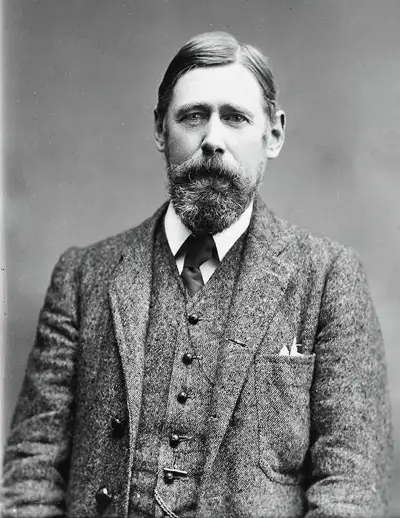
Stephen Lucius Gwynn was an Irish journalist, biographer, author, poet and Protestant Nationalist politician. As a member of the Irish Parliamentary Party he represented Galway city as its Member of Parliament from 1906 to 1918. He served as a British Army officer in France during World War I and was a prominent proponent of Irish involvement in the Allied war effort. He founded the Irish Centre Party in 1919, but his moderate nationalism was eclipsed by the growing popularity of Sinn Féin.
