Henry Billings Brown Quotes
The object of the [13th] amendment was undoubtedly to enforce the absolute equality of the two races before the law, but in the nature of things it could not have been intended to abolish distinctions based upon color, or to enforce social, as distinguished from political equality, or a commingling of the two races upon terms unsatisfactory to either. Laws permitting, and even requiring, their separation in places where they are liable to be brought into contact do not necessarily imply the inferiority of either race to the other
This was the infamous opinion whereby the Supreme Court upheld the “separate but equal” doctrine thereby preserving racial discrimination until the reversal over 50 years later. See the sole dissent of Justice John Marshall Harlan whose views were those that eventually prevailed although at the time all the other justices voted with the majority. See {583706} and {583703}.
Henry Billings Brown, 1836-1913, U. S. Supreme Court Justice, Plessy v. Ferguson, 1896
Sourced by: Eigen's Political and Historical Quotations


Essentially this quotation led to a major war and yhrn a later war of independence for Blacks in South Africa. Porter was the Attorney General of the English Cape Colony in South Africa. In an early legal ruling he observed that South Aftica was a colony under English law which did not permit discrimination on the basis of skin color. However, there was a large proportion of Afrikaners—whites of Dutch Ancestry who were culturally strong racists and saw the Blacks as a combination of potential rivals for land and a potential subjegated labor force. They tended to leave the Capetown area and English law. The Afrikaners ended up in a major war—the Boer War—against the English and although the English won the war, the Afrikaners won the political peace and ended up dominating South Africa and imposing apartheid. The Blacks of the mid 20th century had if nothing else, the 100 year old legal and moral precendent from Porter’s opinion which justified the ANC leading the attack on apartheid which finally succeeded. It took 100 years and millions of suffering and dying people but finally, the law of South Africa was as Porter had stated it, and since the Blacks were in the great majority, the Whites became the minority, but due to the ANC leadership of men like Nelson Mandella, the Blacks did not seek revenge on the Afrikaner whites although there was resentlent for generations.


This was the infamous opinion whereby the Supreme Court upheld the “separate but equal” doctrine thereby preserving racial discrimination until the reversal over 50 years later. See the sole dissent of Justice John Marshall Harlan whose views were those that eventually prevailed although at the time all the other justices voted with the majority. See {583706} and {583703}.


The Boers were generally furious because the British emancipated the Blacks that the Boers were holding as slaves. This hurt their economic interests. But according to this woman in the middle of it all, the worst of it was the insult of giving the Blacks political and functional equality. This was really very similar to most American Southern racist feeling during Reconstruction. Racism is very pernicious, in that the remedies always bring about insult and anger because the belief structure of slavery and discrimination must be based in a theory of inferiority.
Bilbo was one of the worst racists who ever served in the Congress.
Racial intermarriage was the greatest fear of those who opposed integration.

The Quakers were in the forefront of not only the abolition of slavery but of the integration of the races.

Bilbo was one of the worst racists who ever served in the Congress.


This quotation explains why so many of the Southern poor so actively supported the racist Slavery system even though they could not afford slaves and received no direct benefit from slavery or the discrimination against free Blacks. The poor were not at the bottom of the totem pole, and therefore had a dignity and social status, that the poor in a racially integrated society never possessed.

In the 1930s African Americans who traveled were subject to countless humiliations whenever the sought hotels, rooming houses, restaurants and other accommodations. Gas stations would not allow them to use bathrooms and they were reduced to using open fields. Traveling and vacationing was, for Blacks, humiliating. Wikipedia: “Green reviewed hotels and restaurants that did business with African Americans during the time of Jim Crow laws and racial segregation in the United States. He printed 15,000 copies each year. In the 1930s, Green began his work by compiling data on stores in the New York area that accepted black travelers, and published his first guide in 1936. Similar guides had been published for Jewish travelers, who sometimes faced discrimination. Green's guide was so popular that he immediately began to expand its coverage the next year to other US destinations, adding hotel and restaurants as well.”

Referring to Montgomery Alabama in 1950.

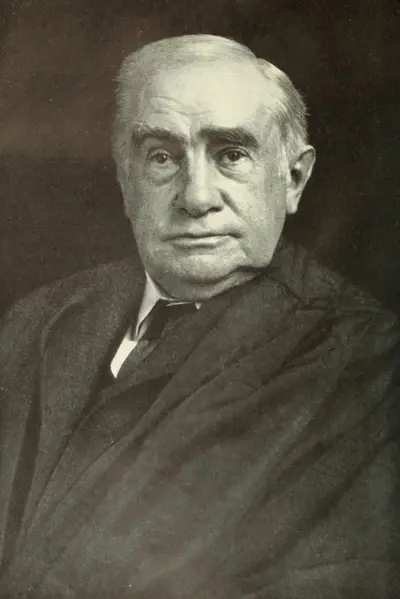
- Born: March 2, 1836
- Died: September 4, 1913
- Nationality:
- Profession:
Henry Billings Brown was an associate justice of the Supreme Court of the United States from 29 December 1890 to 28 May 1906. A respected lawyer and U.S. District Judge in Detroit, Michigan, before ascending to the high court, Brown authored hundreds of opinions in his 31 years as a federal judge, including the majority opinion in Plessy v. Ferguson in 1896, which upheld the legality of racial segregation in public transportation and implicitly provided approval for the system of Jim Crow laws until Brown v. Board of Education in 1954.
