John T. Flynn Quotes
The NRA provided that in America each industry should be organized into a federally supervised trade association. It was not called a corporative. It was called a Code Authority.
Flynn, John T. The Roosevelt Myth. Devin-Adair, 1948.


Brandeis was U. S. Supreme Court Justice Louis D. Brandeis, 1856-1941, who wrote that competition would control prices if only healthy competition could be maintained—the problem was resolved by both increasing competition and much more stringent regulation of corporations.

To the modern reader utterances such as this from a Conservative Prime Minister seem astounding. However, the Great Depression existed in Canada as well as the United States, and Franklin Delano Roosevelt was not the only world leader who would reach the conclusion that business and capitalism must be profoundly regulated and the system changed if it was to be saved.


This is an interesting quotation because it shows that utilities and monopolies using their power and money to avoid effective pro consumer regulation is nothing new and was ongoing as soon as there were government granted monopolies that were supposed to be regulated.


One irony that some critics of Murdoch’s enterprises make is that despite his personal views about monopoly his businesses try to attain and maintain monopoly status whenever it can.


Here, an officer of a large corporation (Pittsburgh Plate Glass) makes the classic argument of large corporations about the anti-trust laws which prevent them from using their economic power to crush competition. The claim that the large corporations are at a disadvantage and handicapped in competing with small companies is easily refuted by the bankruptcy rate of small businesses which is large, and that of large corporations which is very small, and that of major monopolies which is virtually zero.

Hoover was the Food Administrator at that time. Although he gave lip service to the free market economy concept, he was proposing government price controls and rationing. When the free market was not functioning, at this time in his career, he was willing to use government controls and regulation. By the end of 1918 over 250,000 food-handling corporations, firms, and individuals were under Food Administration licenses. Meat, fish, poultry, eggs, butter, milk, potatoes, fresh and dried vegetables, and fruits, canned goods, the coarse grains and rice, vegetable oils, coffee, and such various commodities accessory to food-handling, as ice, ammonia (for ice-making), arsenic (for insecticides), jute bags, sisal, etc., were under direct control. Ironically, later when he was President and faced with the Great Depression, he had become much more rigid and would not “interfere” with the free, private market and use government to solve the national problems. It was Franklin Delano Roosevelt who did that after Hoover would not. At the time he gave this speech, Hoover was not very political and was more of a technocrat. It may have been that by the time he became President he was intellectually and politically locked in to Republican Party conservative economic ideology.


Whenever price controls have been tried, there always seems to develop a black market. However, some argue that price controls can work very well for a modest period of time in a national emergency and give WWII as an example. Although there was a black market, very few Americans participated in it, and the effect was positive as a result of the patriotism that was so keenly felt by most Americans at that time. Further, capital punishment has rarely worked to prevent any illegal activity. In London, pickpockets were publicly hung while other pickpockets fleeced the crowd watching the hanging ostensibly to dissuade people from pickpocketing.

Republicans at that time were adamant protectionists and were violently opposed to free trade. They made a total flip flop on free trade after the Second Word War when the industrial capacity of all of the major industrial nations except America was completely emaciated. America still had production and there was huge money to be made from being the only nation that could deliver goods to the world. Meanwhile Germany, France, England, and Italy, our largest competitors could hardly manufacture for their own needs and could not compete in the American market. So the American corporations then wanted to become free traders.

formerly 2nd Viscount Stansgate


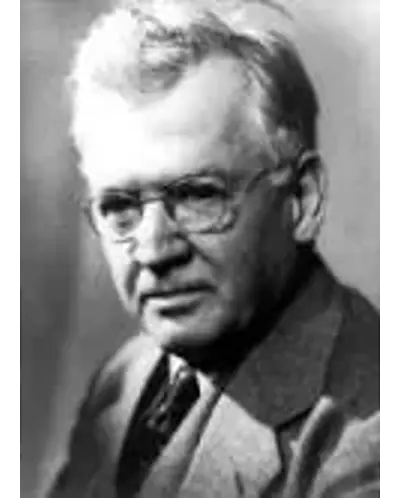
John Thomas Flynn was an American journalist best known for his opposition to President Franklin D. Roosevelt and to American entry into World War II. In September 1940, Flynn helped establish the America First Committee (AFC) which he abandoned when Pearl Harbor was attacked, switching to support of the war effort. He was also the first to advance the Pearl Harbor advance-knowledge conspiracy theory.
