Ida B. Wells Quotes
The nineteenth century lynching mob cuts off ears, toes, and fingers, strips off flesh, and distributes portions of the body as souvenirs among the crowd.
Wells-Barnett, Ida B. "Lynch Law in America." The Arena, vol. 23, no. 1, Jan. 1900, p. 21.

Named after penal reformer Johne Howard, 1726-1790. Howard Associations have since been organized in many countries.

William Z. Foster, the 1928 communist presidential candidate, was arrested because his party’s leaflet contained this “inflammatory” slogan.

Wells, more than any individual in American history, documented and publicized the horrid practice of lynching in the belief that if the American people knew the horrors of what was going on, they would put a stop to it. She was right in the long run but it took more than 50 more years before the last vestiges of this form of racial torture and murder was ended in the South. The morality of the South was so warped that the torture, burning and killing was entertainment—viewed by many townspeople including women and children. The leading citizens of the South refused to investigate and prosecute those who actually performed the lynching even though there were photographs and hundreds of eye witnesses and newspapers carried the horrible stories.


Yuliy Osipovich Martov. Criticism of the Bolshevik behavior in dealing with counter-revolutionaries in the civil war that followed the Russian Revolution. This despite the fact that the death penalty had been abolished right after the Revolution. See {590510}
Reacting to the slogan, "Impeach Earl Warren:"

In 1831 a slave preacher, Nat Turner, led a rebellion in North Carolina killing over 50 whites. Even though Turner and the rebels were captured and executed, whites throughout the South, took vengeance on any slaves they could find. This description was of a North Carolina community.

For years through the Jim Crow years, Whites murdered many Blacks with impunity if they were perceived to be uppity or to try and obtain their Constitutionally Protected rights. Most took place in the South. The Negroes were typically tortured, mutilated, burned and hung from trees where they would be left for days as the major purpose was to strike terror in the Southern Black population. The Southern State and local governments never opposed the policy via oratory, legislation of law enforcement. The Federal Government did not interfere either. And much of the FBI under J. Edgar Hoover actually enabled the White Citizen’s Councils and the Klu Klux Klan. The NAACP began an anti-lynching campaign and Ms. Holiday was a one-woman public exposure campaign centered around this song. The anthem itself was written by a New York City schoolteacher named Abel Meeropol, using the pen name, Lewis Allan. It reached millions of Americans and Holiday fans the world over. To view some of the historical scenes described in the song, see http://withoutsanctuary.org/main.html

The Muslim Brotherhood had won the Presidency in the first Egyptian democratic election shortly after the ouster of Mubarak when they were the only party that was organized. However, after one year of government, their performance was so bad that critics like El Baradei offered strong public criticism—especially of the preoccupation with Islam with little government attention given to freedom, human rights, and the economy which was in terrible shape. This triggered many protests and demonstrations in Tahrir Square where intimidation of protesters was accomplished by beatings and lynchings in the midst of a large number of Brotherhood supporters who would infiltrate the crowd. The Islamic fundamentalists were particularly harsh on female protesters who were beaten, had their clothes ripped off, and in many cases raped. A few days after this article was published there was an insurrection of huge crowds of Egyptians and the Muslim Brotherhood President Morsi was forced to resign.
Sectarian fights had begun to break out two years before. These escalated in ferocity and soon there were some deaths. But this event of terror, torture and atrocity against a family that was not fighting changed the nature of the interreligious Irish conflict forever. The outraged Protestants organized and armed themselves and things came to a climax in September 1795 when there was an armed battle in which the Protestants killed 30 Catholics who were now calling themselves “Defenders”, with few losses. They then marched to Longhgall and there, in the home of James Sloan the Orange Order was founded and the two groups fought each other for the next 200 years.


This is one of many instances where Black leaders advocated armed self-defense. In the early 20th century, this worried whites who often accused these blacks of advocating violence against whites. It also made non-violent, anti-gun, blacks, like Booker T. Washington, more popular.

This argument—that Christians were more cruel and uncivilized than heathens in some respects was very persuasive to many serious white Christians who began to see slavery and the slave trade in a new light.
This statement was published in a major magazine of the time. It referred to a notorious lynching in the South where the victim had been brutally tortured and burned to death. In this case the victim had apparently committed a horrible crime. The Bishop condemned the horrific nature or the lynching but took the view that it was an act of insanity and that the relatives of the child killed by the lynching victim may well have been driven to insanity by the act However, this lynching, like most all in the South was not just an act of vengeance—insane or not—by relatives of a victim, it was participated on by a large mob, many of whom had no relationship to any of the parties. Whites who committed horrible crimes were rarely lynched, but many accused Blacks were lynched even though they turned out to have been innocent.
Queen Boudicca of the Iceni tribe had revolted in Roman Britain. The Romans where particularly harsh in putting down revolts but under Emperor Nero and Caligula after him, they sunk to the deepest of barbarities,


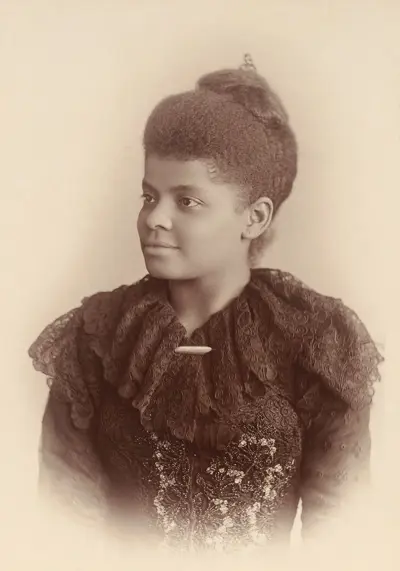
Ida Bell Wells-Barnett was an American investigative journalist, educator, and early leader in the civil rights movement. She was one of the founders of the National Association for the Advancement of Colored People (NAACP). Over the course of a lifetime dedicated to combating prejudice and violence, and the fight for African-American equality, especially that of women, Wells arguably became the most famous Black woman in America.
