Mohamed ElBaradei Quotes
You see people being lynched in public, while others take pictures of the scene. Mind you, this is the 21st century—not the French Revolution.
The Muslim Brotherhood had won the Presidency in the first Egyptian democratic election shortly after the ouster of Mubarak when they were the only party that was organized. However, after one year of government, their performance was so bad that critics like El Baradei offered strong public criticism—especially of the preoccupation with Islam with little government attention given to freedom, human rights, and the economy which was in terrible shape. This triggered many protests and demonstrations in Tahrir Square where intimidation of protesters was accomplished by beatings and lynchings in the midst of a large number of Brotherhood supporters who would infiltrate the crowd. The Islamic fundamentalists were particularly harsh on female protesters who were beaten, had their clothes ripped off, and in many cases raped. A few days after this article was published there was an insurrection of huge crowds of Egyptians and the Muslim Brotherhood President Morsi was forced to resign.
Mohamed El Baradei, Vice President of Egypt, Egyptian Diplomat & Nobel Peace Prize Winner, Director General of the International Atomic Energy Agency, Leader, Egyptian Constitutional Party Description and criticism of the behavior of the protesters and crowds that gathered in Tahrir Square in Cairo, “You Can’t Eat Sharia”, Foreign Policy, July / August 2013
Sourced by: Eigen's Political and Historical Quotations

William Z. Foster, the 1928 communist presidential candidate, was arrested because his party’s leaflet contained this “inflammatory” slogan.


His home was right in the midst of the major riot area. The government had just instituted the draft to provide soldiers for the Civil War. The rich could avoid the draft by paying a modest fee. The Irish of New York were at just slightly above the Negro in the New York Socioeconomic scale and the two groups competed for the low skilled jobs. Many Irish felt that they were being forced to fight to free the Southern Negroes who when free would come to New York and compete for their jobs. They rioted and killed over 100 Blacks.

In 1848 a pro-slavery mob in Washington DC Gamaliel Bailey's anti-slavery publication, The National Era, which soon thereafter was the publisher of the serialized Uncle Tom's Cabin. Senator John P. Hale introduced a bill in the Senate outlawing rioting in the District of Columbia. The Southern Senators objected violently and this served as a catalyst for one the for the most extensive and bitter public debate that had ever been held on the slavery issue.


Instead of standing and saluting as professional athletes have done for decades before games, he kneeled and refused to stand. This caused great public criticism but also some initial support. He was potentially risking his multimillion dollar salary as this technically violated his contract to avoid anything embarrassing to the team. He also donated $1 million to programs in the area that were working to enhance Black/white understanding. Even those who disagreed with his choice of protest defended his right to do so, and after the initial furor, public opinion, while not in agreement about his method, tended to support him for having the courage of his convictions and using his celebrity for a worthy cause. After sensing the public opinion, his team matches his $1 donation. Professional athletes both in the NFL and in other sports then began to do the same as a form of protest for the large, disproportionate, number of black men who were killed, mostly when unarmed, by police. The reference to the “paid leave” was the practice followed by most police departments—usually required by collective bargaining agreements with police unions—of placing police officers accused of committing violations of laws or regulations on paid administrative leave while all the investigations, hearings, and other processes . While this practice protected the rights of those police officers who were not guilty, it ended up paying brutal murders for a some time entire their case was decided or acted upon be the district attorney.


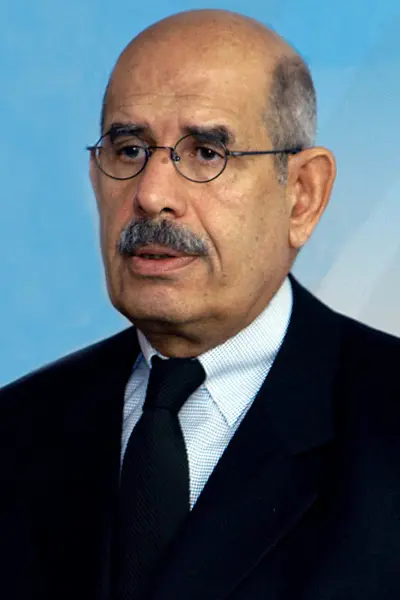
Mohamed Mustafa ElBaradei is an Egyptian law scholar and diplomat who served as Vice President of Egypt on an interim basis from 14 July 2013 until his resignation on 14 August 2013.
