Emanuel Celler Quotes
The murder, savage brutality, and violence perpetrated by Alabama lawmen have so aroused the nation as to make action by the Congress necessary and speedy.
Emanuel Celler, 1888-1981, U.S. Congressman (Democrat, NY), Statement, March 1965
Sourced by: Eigen's Political and Historical Quotations


Kennedy was initially very opposed to a civil rights march on Washington and seemed very annoyed to the Blacks in attended. But when faced with the reality of the fact that the March was going to take place and he could not prevent it, he turned around and did everything he could do to protect the marchers and enable the historic event.


The law enforcement officers were the ones who broke the law when they beat and brutalized the peaceful civil rights marchers. The “white niggers” refer to the white marchers including clergy.


His home was right in the midst of the major riot area. The government had just instituted the draft to provide soldiers for the Civil War. The rich could avoid the draft by paying a modest fee. The Irish of New York were at just slightly above the Negro in the New York Socioeconomic scale and the two groups competed for the low skilled jobs. Many Irish felt that they were being forced to fight to free the Southern Negroes who when free would come to New York and compete for their jobs. They rioted and killed over 100 Blacks.

Instead of standing and saluting as professional athletes have done for decades before games, he kneeled and refused to stand. This caused great public criticism but also some initial support. He was potentially risking his multimillion dollar salary as this technically violated his contract to avoid anything embarrassing to the team. He also donated $1 million to programs in the area that were working to enhance Black/white understanding. Even those who disagreed with his choice of protest defended his right to do so, and after the initial furor, public opinion, while not in agreement about his method, tended to support him for having the courage of his convictions and using his celebrity for a worthy cause. After sensing the public opinion, his team matches his $1 donation. Professional athletes both in the NFL and in other sports then began to do the same as a form of protest for the large, disproportionate, number of black men who were killed, mostly when unarmed, by police. The reference to the “paid leave” was the practice followed by most police departments—usually required by collective bargaining agreements with police unions—of placing police officers accused of committing violations of laws or regulations on paid administrative leave while all the investigations, hearings, and other processes . While this practice protected the rights of those police officers who were not guilty, it ended up paying brutal murders for a some time entire their case was decided or acted upon be the district attorney.


Black protests and demonstrations were emerging throughout the country after a white police officer shot to death an unarmed black teenager in Ferguson, MO. This argument was made by a number of police apologist whites who could not understand the ferocity and passion of the demonstrations, but Giuliani was the most prominent politician taking that viewpoint. See {642521} for the refutation and response.


J. Edgar Hoover, the racist FBI Director, and the Chief of Police of the all white Washington DC Police Force, had made phone calls and sent memos to as many important people they could reach, warning that there was bound to be violence if 100,00 militant Blacks tried to march on Washington. There were twice that number planned for by Bayard Rustin, the man in charge of the March planning, but 250,000 showed up. There were very few incidents and no injuries and deaths as a result of some brilliant planning by Rustin and the cooperation of Attorney General Robert F. Kennedy—the President’s brother—with Rustin. However, the fear spread by Hoover and others caused the major league baseball games to be cancelled, liquor stores to be closed, stores and offices throughout the city were intimidated and closed. But it was one of the best organized and peaceful social/political demonstrations in history.


Wilson, a history and government professor and college president before politics, was has been accused of being one of the most racist Presidents since Reconstruction. Prior to his Presidency, the Federal Government had been making steady progress in hiring African Americans. Under Wilson there was a wholesale firing of a large proportion of them. Some apologists argue that his League of Nations and other major aspirations required the votes and cooperation of Southern Senators who insisted that many of the blacks be terminated. At the same time, the KKK was near the zenith of its membership and political power and was an intimidating force. Wilson’s home state of New Jersey not only had a large KKK membership but there were lynching of Blacks in his own state and when Governor and President he never asked for any anti-lynching legislation.
Lincoln had instituted the first draft in American History and it was terribly resented by many Americans. The draft laws allowed the wealthy and upper middle class to avoid service by paying a $300 fee of hiring a substitute just like in the Vietnam War the upper classes could get College Draft deferments. The mob led mostly by poor Irish, began by protesting the draft; then they attacked the mansions and houses of the wealthy; and then they went after Blacks. The Irish poor feared large numbers of Negroes coming out of slavery and competing for their jobs and lowering the prevailing wages. Blacks were beaten and lynched and 5,000 almost half of the then Negro population were driven to Brooklyn, New Jersey and the New York suburbs. It was the worst riot in United States History.


The Muslim Brotherhood had won the Presidency in the first Egyptian democratic election shortly after the ouster of Mubarak when they were the only party that was organized. However, after one year of government, their performance was so bad that critics like El Baradei offered strong public criticism—especially of the preoccupation with Islam with little government attention given to freedom, human rights, and the economy which was in terrible shape. This triggered many protests and demonstrations in Tahrir Square where intimidation of protesters was accomplished by beatings and lynchings in the midst of a large number of Brotherhood supporters who would infiltrate the crowd. The Islamic fundamentalists were particularly harsh on female protesters who were beaten, had their clothes ripped off, and in many cases raped. A few days after this article was published there was an insurrection of huge crowds of Egyptians and the Muslim Brotherhood President Morsi was forced to resign.
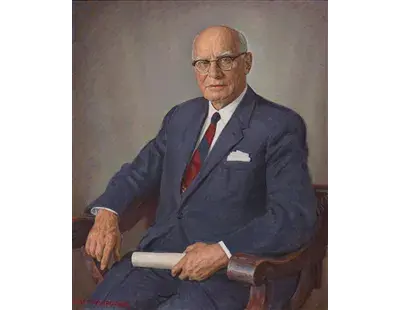
Emanuel Celler was an American politician from New York who served in the United States House of Representatives for almost 50 years, from March 1923 to January 1973. A member of the Democratic Party, during World War II, Celler strongly supported help for Jewish refugees fleeing Europe, and as Chairman of the House Judiciary Committee for all but two years between 1949 and 1973, he ushered through the House the major civil rights movement legislation of the era. His district was based in Brooklyn and Queens.
