Alice Walker Quotes
I grew up in the South under segregation. So, I know what terrorism feels like - when your father could be taken out in the middle of the night and lynched just because he didn't look like he was in an obeying frame of mind when a white person said something he must do. I mean, that's terrorism, too.


Wilson, a history and government professor and college president before politics, was has been accused of being one of the most racist Presidents since Reconstruction. Prior to his Presidency, the Federal Government had been making steady progress in hiring African Americans. Under Wilson there was a wholesale firing of a large proportion of them. Some apologists argue that his League of Nations and other major aspirations required the votes and cooperation of Southern Senators who insisted that many of the blacks be terminated. At the same time, the KKK was near the zenith of its membership and political power and was an intimidating force. Wilson’s home state of New Jersey not only had a large KKK membership but there were lynching of Blacks in his own state and when Governor and President he never asked for any anti-lynching legislation.


Buying furniture and equipment for Negro schools was perceived by the White Population as “squandering public funds”. Web returned with the Militia but no one would testify against the Klan. Huggins left the area and went to the North. The Klan did not kill him, but they accomplished their objective of intimidating all the local people Black and White so that Negro schools would not be furnished and getting rid of the only White who tried to improve Negro schools. The methods of terrorists have not changed much since then.

Armstrong rarely commented on politics (see {615854}), but the Governor defying the Supreme Court and not letting his people even go to school with other students was too much for him. He not only made the statement, but he approved it for publication. This shocked many who knew him as an apolitical person. He was particularly distressed with President Eisenhower who although he had warned Faubus that he would enforce the court order and then used federal troops to do so, Eisenhower was a man of action and not rhetoric and his lack of firm public statements overlooked an opportunity to use the Presidential “bully pulpit” and exercise his moral leadership and authority. Many then, and even 50 years later, were not sure where he stood on the issue of school desegregation. See {615852}.

Justice Marshall, in he early career played an extremely important role in the development of the law vis a vis race and discrimination in America. He went from town to town in the Jim Crow, segregated South filing and often winning civil rights lawsuits. This was an era where lynching was still prevalent, and he was often threatened with bodily harm or death. Justice Ginsberg who also had been a leader in filing and winning civil rights suits but she worked in the area of women’s rights. The host had stated that she and Marshall were the great legal pioneers in civil rights litigation. Ginsberg explained that she hers was a much easier role and Marshall should receive much more credit. This was her reason.


The Muslim Brotherhood had won the Presidency in the first Egyptian democratic election shortly after the ouster of Mubarak when they were the only party that was organized. However, after one year of government, their performance was so bad that critics like El Baradei offered strong public criticism—especially of the preoccupation with Islam with little government attention given to freedom, human rights, and the economy which was in terrible shape. This triggered many protests and demonstrations in Tahrir Square where intimidation of protesters was accomplished by beatings and lynchings in the midst of a large number of Brotherhood supporters who would infiltrate the crowd. The Islamic fundamentalists were particularly harsh on female protesters who were beaten, had their clothes ripped off, and in many cases raped. A few days after this article was published there was an insurrection of huge crowds of Egyptians and the Muslim Brotherhood President Morsi was forced to resign.

William Z. Foster, the 1928 communist presidential candidate, was arrested because his party’s leaflet contained this “inflammatory” slogan.

Louis Eugene Walcott


Some had organized and led lynchings; others participated, and others stood by without speaking out.


Blacks were not allowed to testify in court in the Southern States. The reasons why has never been clear. Many slave keeping societies like Ancient Rome not only allowed slaves to testify in the courts, but required them to do so in many circumstances even when their owners were opposed.

Forrest went on to be the first National Leader of the Terrorist Organzation.

This quotation illustrates how the racist South defeated the objectives of the Civil War and Reconstruction by the institution of Jim Crowe laws and so called “states’ rights”. It would take more than another half century for the Yankees and the vast majority of the non-Southern Americans decided that the Southerners could no longer “do as they pleased” with fellow human beings. It is hard to believe for us today that an entire section of our country could actually believe in the morality of the South but that is the tragic history of race relations in America.
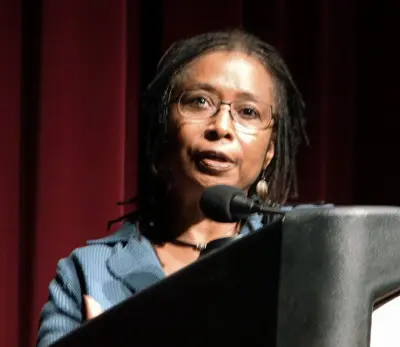
Alice Malsenior Tallulah-Kate Walker is an American novelist, short story writer, poet, and social activist. In 1982, she published the novel The Color Purple, for which she won the National Book Award for hardcover fiction, and the Pulitzer Prize for Fiction. She also wrote the novels Meridian (1976) and The Third Life of Grange Copeland (1970). An avowed feminist, Walker coined the term womanist to mean "A black feminist or feminist of color" in 1983.
