Margaret Chase Smith Quotes
The nation sorely needs a Republican victory. But I don't want to see the Republican Party ride to political victory on the Four Horsemen of Calumny — Fear, Ignorance, Bigotry, and Smear.
She was the first member of the Senate to Condemn McCarthy for his abuse and lies. Led by her example, the other senators got over their fear of McCarthy attacking them and the Senate Censured the Demagogue. She had a significant role in stopping and censuring Joseph P. McCarthy, but her “Four Horsemen” have been a constant struggle for moderate Republicans thereafter. While she was one of America’s great senators, 60 years later she would not be able to be nominated by her own party it had moved so far to the right.
Margaret Chase Smith, 1897-1995, U. S. Senator (Republican, Maine), Declaration of Conscience, 1950
Sourced by: Eigen's Political and Historical Quotations

35 years earlier Vice President Hubert Humphrey used the same phrase to describe Republican attacks.

35 years later Richard Gephardt used the same phrase to describe Republican tactics.


This is another example where our intelligence analysis was totally wrong. It also shows that intelligence being influenced by ideology and politics has a long history in America as elsewhere.

This is an interesting historical quotation in that the same political environment existed in the first two decades of the 21st century. She was in particular referring to the slander that was commonly used by her fellow Republican, Senator Joseph P. McCarthy in his demagoguery. She was the first member of the Senate to Condemn McCarthy for his abuse and lies. Led by her example, the other senators got over their fear of McCarthy attacking them and the Senate Censured the Demagogue.

The Red Scare had already reached most conservatives and Truman and most others had not yet been affected by the fear of Communism that so many people had through the 1970s.

In large part he was referring to McCarthyism and the Red Scare.
The congressman had a 93% Conservative voting record and was castigated by right wing talk radio so much that he lost his Republican primary election after 12 years of excellent representation in Congress.
The Republicans lost the Congressional election of 2006. See {616069}.

The press secretary found the President very morose the day after his great triumph of passing the Civil Rights Bill of 1964. Moyers asked why he looked so sad.

New York is overwhelmingly Democratic and yet the city bid for the convention. Having won, the city tried to make the reception as hospitable as possible.


Many in Congress were afraid of McCarthy as he would charge that anyone who criticized him was a Communist or Communist Sympathizer. Young John F. Kennedy was one of those who was intimidated into silence. Fulbright was one of the few who had the courage to take McCarthy on. Later, McCarthy was censured by the Senate and it afterwards it was revealed that he was a paranoid alcoholic but he did a tremendous amount of damage.


The Tea Party Republican faction was opposed to government doing much of anything other than Defense and Foreign Policy. The regular Republicans saw a much more extensive and robust role of government though few did so to the same extent as Abraham Lincoln and the other founders of the Republican Party, and Theodore Roosevelt and Dwight D. Eisenhower the Republicans following in the Alexander Hamilton tradition.

The exact same thing was also done by the Southern Democrats.


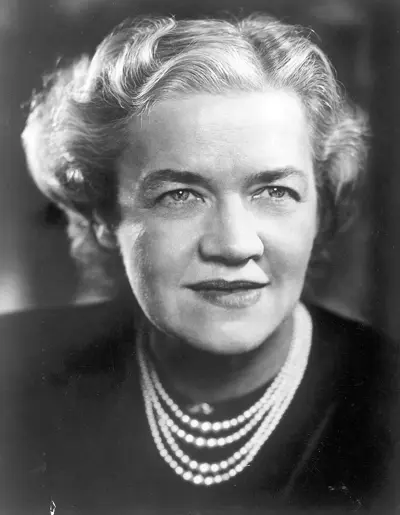
Margaret Madeline Chase Smith was an American politician. A member of the Republican Party, she served as a U.S Representative (1940–49) and a U.S. Senator (1949–73) from Maine. She was the first woman to serve in both houses of the United States Congress, and the first woman to represent Maine in either. A moderate Republican, she was among the first to criticize the tactics of Joseph McCarthy in her 1950 speech, "Declaration of Conscience". Smith was an unsuccessful candidate for the Republican nomination in the 1964 presidential election, but was the first woman to be placed in nomination for the presidency at a major party's convention.
