Edward R. Murrow Quotes
It seems the only way to induce action in this country is through the creation of fear and hysteria.
Edward R. Murrow, 1908-1965, Journalist, Director, United States Information Agency, Letter to Lady Milner, 1948
Sourced by: Eigen's Political and Historical Quotations


Note that he in this quotation extended the Eisenhower “Military-Industrial Complex” threat to include the anti Terrorism government agencies (Homeland Security, FBI, NSA. CIA) and the corporations which support and supply them.


The congressman had a 93% Conservative voting record and was castigated by right wing talk radio so much that he lost his Republican primary election after 12 years of excellent representation in Congress.


She was writing regarding the first use of television in a presidential campaign and the first time the public had ever been exposed to spot political ads. The practice, innovated in the Eisenhower campaign of 1952, was thought of as playing to the lowest element of the electorate’s psyche—selling politicians as if they were breakfast cereal or soap flakes.

The Netherlands at that time had a representative republic, but whenever there were troubles, there were many who urged the appointment of a strongman—usually a prince or other noble. In the Dutch republic at the time, de Witt was the Chief Executive, but under their constitution, he could do little without the approval of the parliament. A strong leader with dictatorial powers was called for as there was little experience with a democratic republic and people did not have confidence that governance in a crisis was possible without dictatorial powers lodged in one man. Even in America, there tends to be more power taken by the presidency in time of war and other crises. So the fear and the argument has not changed in almost 400 years.


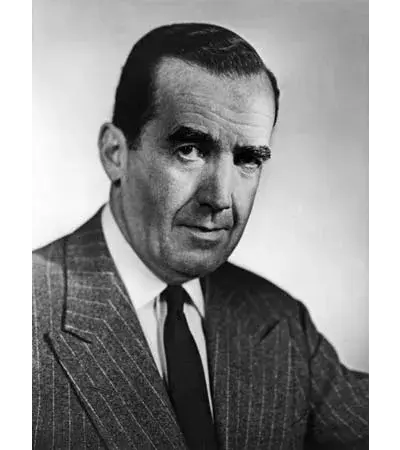
Edward Roscoe Murrow, born Egbert Roscoe Murrow, was an American broadcast journalist and war correspondent. He first gained prominence during World War II with a series of live radio broadcasts from Europe for the news division of CBS. During the war he recruited and worked closely with a team of war correspondents who came to be known as the Murrow Boys.
