Edgar Bronfman Sr. Quotes
The most vexing problem Israel faces is its relations with its neighbors. From the inception of the state until today, Israelis have felt besieged, surrounded by enemies who want to make them disappear.
Bronfman, Edgar M., and Beth Zasloff. Hope, Not Fear: A Path to Jewish Renaissance. St. Martin's Press, 2008.


The “radicals” refer to the extremely conservative, religiously-oriented Israelis. To them the only real and important element is the land that God gave to the Jewish people. They see the State as artificial and whose only legitimate role is to protect and defend the land of Israel. God has ordained the laws in the Talmud—the first 5 Books of the Old Testament. They do not believe in democracy but seek a Hebrew Theocracy of the Ancient Jews before they made the error of having kings. Some of them opposed the civil government of Israel when the country was founded via a UN resolution and a few would not even defend the new country under a civil government. The relative moderates see Israel as a nation state where the land of Israel can be changed, negotiated, traded as other nations do with their borders. One irony is no one knows exactly the borders of the land which God gave to the Jews and this is why archeology is so politically important in Israel compared to other countries.


The Palestinians were split between supporters of Hamas and Fatah. The former was a terrorist organization which refused to recognize the right of Israel to exist and whose charter called for the killing of all Jews. The latter, accepted the right of Israel to exist and was committed to peace and coexistence with the Jewish state. They had fought a civil war and Hamas controlled Gaza with well over 1 million people which they seized for force and killed of forced out Fatah Representatives. Fatah was the elected ruling party of the West Bank, the larger and more populous of the Palestinian territories. There was little chance of any peace given that split. However, Israel which had undergone over 7000 rockets fired upon them by Hamas, stated that they refused to negotiate with the Palestinians as long as the Hamas terrorists were a part of the control of the potential Palestinian state. They would only discuss a 2 state solution if Hamas agreed that they accepted the right of Israel to exist in their general territory as a Jewish State, Hamas would accept and follow previous agreements made with the Palestinians, and Hamas would give up terrorism and the objective of killing Jews. So either Hamas would have to change its policies or Israel would negotiate with an organization that claimed it would never accept the existence of that country as a Jewish state. Al-Masri thought that the agreement he had mediated, was a necessary first step and was constructive for all the parties.

At the time YaAlon was Rabin’s Chief of Intelligence.


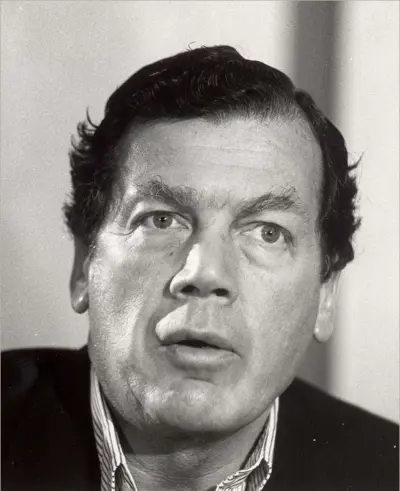
Edgar Miles Bronfman was a Canadian-American businessman. He worked for his family distilled beverage firm, Seagram, eventually becoming president, treasurer and CEO. As President of the World Jewish Congress, Bronfman is especially remembered for initiating diplomacy with the Soviet Union, which resulted in legitimizing the Hebrew language in USSR, and contributed to Soviet Jews being legally able to practice their own religion, as well as emigrate to Israel.
