David Stephenson Rohde Quotes
The most potent long term weapon against jihadists is moderate Arabs and South Asians, not American soldiers.
David Stephenson Rohde, Journalist & Historian, Reimagining American Influence In a New Middle East, 2013
Sourced by: Eigen's Political and Historical Quotations


He argues that even if the concession to terrorists is seemingly small, there is much greater damage in that the minimal concession will also stimulate more attempts to gain other victories. See {629723} for his complementary statement on dealing with terrorists.

Most Americans and Europeans and their governments feel that Muslim leaders and organizations have not done very much in terms of “drawing the line” and publicly condemning terrorism. However many of the critics did not understand the intimidation that exists in most Islamic communities where the fascist fundamentalists target any Muslim public critics as heretics and apostates themselves. Many have been killed or injured in assassination attempts.

Islamic religious extremists do not allow freedom of religion, freedom of speech, freedom of the press, right to life, freedom from torture and mutilation, self-government, gender equality, protection of children or women from violence, sexual freedom, freedom of expression, reproductive rights for women, right work, which are just a few. The modern Islamic extremists allow about the same human rights as did the Christian Kings and the Church of 1000 years ago. Ironically, it is less respect for human rights that many of the great Islamic societies provided 1000 years ago.

Essentially, he is advocating a reformation of the Islamic religion, much like that which has taken place in Christianity and Judaism. However, while most Muslims of the world are not extreme fundamentalists, most of the existing clerics (as did their Christian and Jewish counterparts years ago) turn any attempt at reform into blasphemy and sin. Throughout much of the Islamic world, Muslims who argue publicly for reform are at risk for their lives as the existing Muslim clerics generally encourage attacks on reforms or turn a blind eye to efforts to suppress reform.


This quotation illustrates the dissentions that exist between the various Islamic terrorist organizations. The Secretary General of Hezbollah herein castigates the rival and more religiously fundamentalist Al Qaeda for killing innocent Muslims. Not only do neither mind killing innocent people who are not Muslims, but Hezbollah indiscriminately fires rockets into Israeli populated areas and has killed innocent Muslims, Christians and Jews. Further, Hezbollah will force Muslim citizens of Lebanon to store arms and allow rocked firing from their properties and institutions like schools, mosques, and hospitals, knowing perfectly well that they minute they do this, under the Geneva conventions, those homes or institutions become a legal target for retaliatory attacks, artillery, air strikes or ground forces and that innocent Muslim civilians would be killed. The levels of terrorist subtlety is difficult for Westerners to comprehend.


Muslim clerics throughout the world had been relatively mild in their criticism of Islamic Extremists and Terrorists. Delic was one of those who urged stronger moral statements. Many of the Muslim clerics in the world actually were themselves holders of Wahhabi and other extremist views. However, many also opposed terrorism and felt that there was nothing in Islam that could justify the indiscriminate killing. However, a number of these were intimidated lest an extremist Muslim cleric issue a Fatwa calling for his death for heresy. Most of us did not then, and even today, do no really understand the extent and frequency of these threats in the Muslim world (and even in the West) and the very frequent assassination or serious wounding of those Muslims who publicly criticize the extremist terrorists. Delic had much more courage than most.


Tragically, at the time, reasonable, moderate Muslims who did stand up at that time ran the personal risk of social, religious ostracism to physical attack and killing of them and their families.


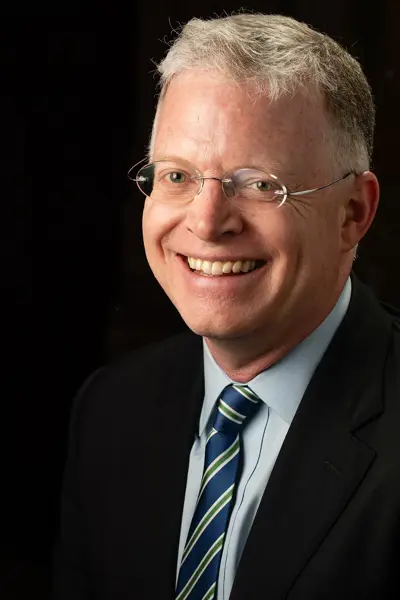
David Stephenson Rohde is an American author and investigative journalist who currently serves as the online news director for The New Yorker. While a reporter for The Christian Science Monitor, he won the Pulitzer Prize for International Reporting in 1996 for his coverage of the Srebrenica massacre. From 2002 until 2005, he was co-chief of The New York Times' South Asia bureau, based in New Delhi, India. He later contributed to the newspaper's team coverage of Afghanistan and Pakistan that received the 2009 Pulitzer Prize for International Reporting and was a finalist in his own right in the category in 2010. He is also a global affairs analyst for CNN.
