Robert Satloff Quotes
We need the help of Muslims to defeat the terrorists—so we have to care what they think [about us].
Robert Satloff, Executive Director, Washington Institute for Near East Policy, Future of Terrorism Seminar, World Affairs Council, February 23, 2005
Sourced by: Eigen's Political and Historical Quotations


This sura illustrates why peace treaties between Islamic and non Islamic countries are difficult to negotiate and enforce. For some fundamentalist Muslims, even making a peace treaty with Israel would constitute a transgression of the word of God. Nonetheless, the first treaty that the United States ever made was with a Muslim nation—Tripoli.


Although the President was personally opposed to terrorism and his policies opposed terrorism, in his country most people supported terrorism and the Islamic schools—madrasas—taught intolerance, hate and terrorism. Even leading generals of the army were major supporters of terrorism. See {586700} as an example.
Islam was not very strong at this point and the followers of Muhammad were relatively few and the Medina area contained Arab Non-Believers, Jews as well as the new Muslims. Muhammad drew up this document and got the non Muslims to agree to it. Not only were Jews able to practice their religion freely (as were the non-Muslim Arabs) but there was not tax on the non Muslims that was imposed later when the Muslims were much stronger relative to others. Also, which surprises many Jews and Muslims alike, the Community – the Ulma – the People included the Jews and Arab Non Believers. Today it is only the Muslims.


Tragically, at the time, reasonable, moderate Muslims who did stand up at that time ran the personal risk of social, religious ostracism to physical attack and killing of them and their families.


Essentially, he is advocating a reformation of the Islamic religion, much like that which has taken place in Christianity and Judaism. However, while most Muslims of the world are not extreme fundamentalists, most of the existing clerics (as did their Christian and Jewish counterparts years ago) turn any attempt at reform into blasphemy and sin. Throughout much of the Islamic world, Muslims who argue publicly for reform are at risk for their lives as the existing Muslim clerics generally encourage attacks on reforms or turn a blind eye to efforts to suppress reform.


Most Americans and Europeans and their governments feel that Muslim leaders and organizations have not done very much in terms of “drawing the line” and publicly condemning terrorism. However many of the critics did not understand the intimidation that exists in most Islamic communities where the fascist fundamentalists target any Muslim public critics as heretics and apostates themselves. Many have been killed or injured in assassination attempts.


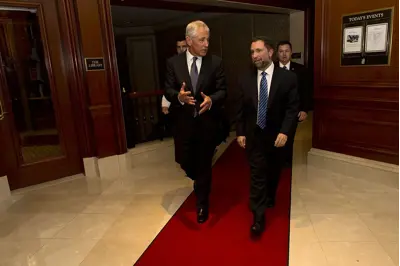
Robert B. Satloff is an American writer and, since January 1993, the executive director of the Washington Institute for Near East Policy (WINEP). Satloff's expertise includes "U.S. policy, public diplomacy, Arab and Islamic politics, Arab-Israeli relations, U.S.-Israel relations, peace process, Middle East democratization." Satloff is also a member of the board of editors of the Middle East Quarterly, a publication of the Middle East Forum.
