Birch Bayh Quotes
The more complicated you make a Constitutional amendment …, the more contingencies for which you provide, the more difficult it is to get it passed.
Birch Bayh, U. S. Senator (Democrat, IN), One Heartbeat Away
Sourced by: Eigen's Political and Historical Quotations


The argument was Prohibition, the 18th Amendment.

This proposed Constitutional Amendment was debated just before Abraham Lincoln would take office. The South wanted to tie his hands on the Slavery issue, and wanted to end what had become a constant polarized Congressional debate over slavery. Of course, their idea of ending the debate was to Constitutionally prohibit further attempts to outlaw or otherwise interfere with slavery in the Southern states. A number of Northern members of Congress voted for it realizing that there was little or no chance of obtaining the ratifications of ¾ of the states and they wanted to buy some time for the Southerners to calm down over their fear of Lincoln and his upstart Republican party. The Amendment never obtained the needed votes though a few states did ratify it. Secession and the Civil War mad the amendment moot. The Southern position was so rigid, that they would compromise in no way on the slavery issue, and ended up of course losing more than they ever thought was possible by succeeding. Another reason this proposed amendment is historically important, is that it is yet another strong piece of evidence that the issue of the Civil War was slavery and not differences in political and economic philosophies as many Southerners have claimed since then. If States Rights in general were the great concern, would have been no reason to single out slavery if it were not the major issue. Yet the last phrase, “including that of persons held to labor or service by the laws of said State” does just. Similar evidence is given by the Secession Resolutions of the Southern States and the debates around them. It is clear that slavery was the issue that the South fought over.


The 10th Amendment was created to take care of this objection which Jefferson and many others had.


In 1953 the Senator had proposed a Constitutional amendment that would severely curtail the treaty making powers of the President. President Eisenhower actively opposed Bricker and the right wing of his own party. The Senator was outraged. Despite Bricker’s complaining, the public and the Congress sided with the President.

The State Constitutional ratification convention for Constitutional amendments is


The comment was prompted by FDR’s attempt to “pack” the Supreme Court.

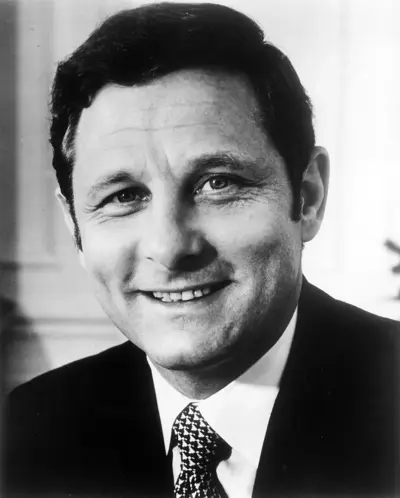
Birch Evans Bayh Jr. was an American Democratic Party politician who served as U.S. Senator from Indiana from 1963 to 1981. He was first elected to office in 1954, when he won election to the Indiana House of Representatives; in 1958, he was elected Speaker, the youngest person to hold that office in the state's history. In 1962, he ran for the U.S. Senate, narrowly defeating incumbent Republican Homer E. Capehart. Shortly after entering the Senate, he became Chairman of the Subcommittee on Constitutional Amendments, and in that role authored two constitutional amendments: the twenty-fifth—which establishes procedures for an orderly transition of power in the case of the death, disability, or resignation of the President of the United States—and the twenty-sixth, which lowered the voting age to 18 throughout the United States. He is the only non–Founding Father to have authored two constitutional amendments. Bayh also led unsuccessful efforts to ratify the Equal Rights Amendment and eliminate the Electoral College.
