Noah Webster Quotes
The moral principles and precepts contained in the Scriptures ought to form the basis of all our civil constitutions and laws . . . The religion which has introduced civil liberty is the religion of Christ and his Apostles . . . This is genuine Christianity and to this we owe our free constitutions of government.
Webster, Noah. History of the United States. Durrie & Peck, 1832, pp. 332-339.

At the beginning of our nation, before there was a Constitution, the state of Virginia prohibited clergy from serving in the state legislature.


This is the first American ordinance of freedom of conscience. Note that it only provided freedom of religion for Christians. However, that was an important first step as different sects of Christianity had been persecuting each other whenever the opportunity arose.

The treaty, which was also ratified by the Senate, was actually drafted by Joel Barlow, the U. S. Consul in Tripoli. It was the first official statement of the United States on its religious basis or lack thereof.

Cromwell had died and Charles II had not yet regained power. This quotation is significant because it is one of the early claims that a republican commonwealth is the form of government advocated by Christ and implied by Christianity. The majority of writers had for years maintained that monarchy itself was required by Christianity and that monarchs ruled by the “will of God.”

Williams was the first theologian who not only advocated religious toleration but argued that Christianity demanded it and the separation of church and state.


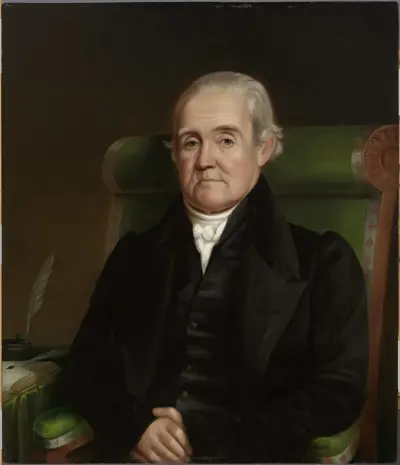
Noah Webster Jr. was an American lexicographer, textbook pioneer, English-language spelling reformer, political writer, editor, and author. He has been called the "Father of American Scholarship and Education". His "Blue-backed Speller" books taught five generations of American children how to spell and read. Webster's name has become synonymous with "dictionary" in the United States, especially the modern Merriam-Webster dictionary that was first published in 1828 as An American Dictionary of the English Language.
