Moshe Dayan Quotes
The method of collective punishment so far has proved effective.
Dayan, Moshe. Quoted in The New York Times, 15 Oct. 1969, p. 3.


This was the day after the Al Qaeda attack on the World Trade Center and the Pentagon, 9-11. Perle, a leading neoconservative advisor and guru, from that day on advocated for the invasion of Iraq. The irony was that at that time, Iraq had never attacked an American, anywhere in the world. Also, there was no Al Qaeda presence in Iraq. Many believe that the neocon main reason to invade Iraq was a regime change and democratization that would, they believed, be a catalyst for democracy throughout the Middle East. The supposed role in 9-11 and the WMD were for them just excuses to initiate military action, so they, the Vice President, and others who agreed with their objective did not question very seriously the so called intelligence about Iraq.

In addition to facing regular Confederate Troops, there were irregular insurgents who would fire at and harass normal civilian activity much like the terrorists in the Mideast today. Like today, the insurgents could exist only as long as they were sheltered and assisted by the Southern civilian population. Sherman did not see this as collective punishment as all the people in the small town of Randolph were helping the insurgents.


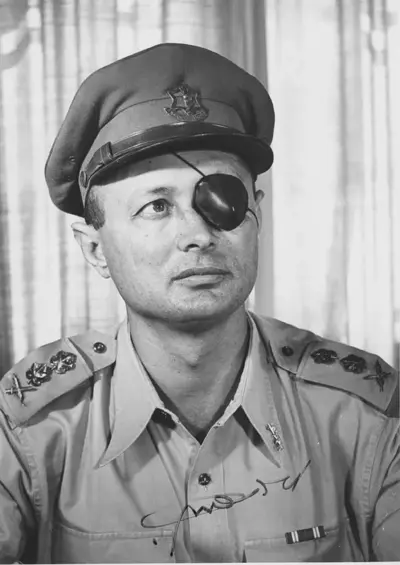
Moshe Dayan was an Israeli military leader and politician. As commander of the Jerusalem front in the 1948 Arab–Israeli War, Chief of Staff of the Israel Defense Forces (1953–1958) during the 1956 Suez Crisis, but mainly as Defense Minister during the Six-Day War in 1967, he became a worldwide fighting symbol of the new state of Israel. In the 1930s, Dayan joined the Haganah, the pre-state Jewish defense force of Mandatory Palestine. He served in the Special Night Squads under Orde Wingate during the Arab revolt in Palestine and later lost an eye in a raid on Vichy forces in Lebanon during World War II. Dayan was close to David Ben-Gurion and joined him in leaving the Mapai party and setting up the Rafi party in 1965 with Shimon Peres. Dayan became Defence Minister just before the 1967 Six-Day War. After the Yom Kippur War of 1973, during which Dayan served as Defense Minister, he was blamed for the lack of preparedness; after some time he resigned. In 1977, following the election of Menachem Begin as Prime Minister, Dayan was expelled from the Labor Party because he joined the Likud-led government as Foreign Minister, playing an important part in negotiating the peace treaty between Egypt and Israel.
