Vladimir Lenin Quotes
The Marxist doctrine is omnipotent because it is true. It is comprehensive and harmonious, and provides men with an integral world outlook irreconcilable with any form of superstition, reaction, or defence of bourgeois oppression. It is the legitimate successor to the best that man produced in the nineteenth century, as represented by German philosophy, English political economy and French socialism.
Lenin, Vladimir I. "The Three Sources and Three Component Parts of Marxism." 1913. Lenin Collected Works, Vol. 19, Progress Publishers, 1963, p. 23.


This principle represented one of the rifts between Gorter and Lenin. Lenin and most Russian Communists insisted that labor unions be subservient to the Communist Party and the State. Gorter, and a few other socialists argued for the independence of the unions from the control of all but its membership. Unions subservient to political parties have been disastrous in some of the Communist countries but also in the Fascist nations where the right wing took over control of the unions. Even in America, the Communist Party attempted to take over the unions in the first half of the 20th century and actually succeeded in a few cases. Those opposing unions of any kind saw little difference between the unions and the Communist Party. Some American unions came under the control of the communists and others under the control of the companies, but most have been independent.


She and Gorter were communist leaders who completely disagreed with Lenin and Stalin regarding the governance of society. While they believed that the party should function as dictator of the society and party leaders should control the party, Luxemburg had a much more democratic view of communism.

This was the basic document issued after the Russian Revolution establishing the basic legal and economic structure of the new Soviet State.


The reason that this quotation is important is that most Americans from the 1920s on concerned with Marxism and communism in the United States, conflated Marxism with Anarchists as if Marxists were anarchists who were bent on violence. In reality, to most Marxists, anarchists were more their enemy than the capitalists. Stalin was then only 28 years old and the Russian revolution was 9 years in the future.

He was a major critic of Socialism but he did acknowledge that the Socialist Movement had made major contributions.


Since the end of WWII till the breakup of the Soviet Union, the Bulgarians were part of the Soviet Bloc and operated under communism that was supposedly based on Marxism. However it was not in many critical respects. But few modern Russian style Communists are familiar with or understand Marxism.

Note that although he was always portrayed as a dedicated communist, he was not fond of communism as a way of life. He thought that it was a fairer way of distributing the benefits of society however.


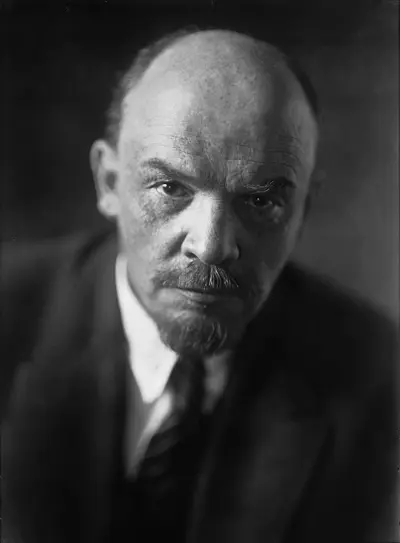
Vladimir Ilyich Ulyanov, better known by his alias Lenin, was a Russian revolutionary, politician, and political theorist. He served as the first and founding head of government of Soviet Russia from 1917 to 1924 and of the Soviet Union from 1922 to 1924. Under his administration, Russia, and later the Soviet Union, became a one-party socialist state governed by the Soviet Communist Party. A Marxist, he developed a variant of this communist ideology known as Leninism.
