Russia Quotes
The government belongs wholly to the toiling masses and their fully empowered representatives, the Soviets of Workers', Soldiers', and Peasants' Deputies.
This was the basic document issued after the Russian Revolution establishing the basic legal and economic structure of the new Soviet State.
Russia, Constituent Assembly, Declaration Of The Rights Of The Toiling And Exploited Peoples
Sourced by: Eigen's Political and Historical Quotations

Vladimir Lenin. Most did not and the Communist government was brutal and murderous in forcing them into the Communist culture, outlook, and behavior. See {640096} for a description of some of the effort.


Vladimir Lenin. Actually, when the peasants resisted collectivization the Russian State did use violence and intimidation. And Stalin later completely ignored this principle and brutalized the peasantry.

So many Afghans thought very differently and resisted Amin’s Government and the Russians, that the Russians pulled out of Afghanistan.
Advocating a revolution against the Karenski provisional government: Vladimir Lenin

This is a very important historical, political quotation. The conservatives have since the Russian Revolution conflated socialism and communism. However, here in 1932 the leader of the American Socialist Party had already described the Communist Revolution in Russia as a failure of founding an acceptable modern state. Nonetheless, even into the 21st century many conservatives describe Thomas as a Communist. See {626692} for his distinction between Communism and Socialism. The difficulty of modern nation building was explained by Thomas and others but was really not accepted until the many attempts of the early 21st century, some supported by America like Iraq and Afghanistan and the Balkans and others like the “Arab Spring.” Then his early wisdom on this point became more appreciated.


Executed by the English for his part in the Easter Uprising.


There are some who question the authenticity of this Steinbeck quotation on the grounds that all the references to it seem to be secondary sources. However, we lean toward its authenticity.
Despite the fact that many conservatives labeled him a Communist, he not only saw them as different but was very critical of the failure as he saw it of Russian Communism. See {626693} .


Vladimir Lenin

Most Americans looked at anarchists as communists. They generally were not, and opposed state communism as much as state capitalism. In many ways they distrusted government the way some modern libertarians do.

The reason this is an important quotation is that since the end of WWII, most Americans have used the term “socialism” rather loosely. President Obama for example is often referred to as a socialist by his political enemies. Conservatives refer to Norway, Sweden and Denmark and other European nations as socialist states. But none of them would ever meet the definition of a socialist state of the major socialist state in history. After WWII, the Russians intimidated many of the Eastern European with force of arms and there were some other socialist states for a while but the all abandoned Soviet style Russian socialism, Ironically, the only state that the old Russian Communists would recognize in 2011 was Cuba. However, there are many who call themselves socialists who would never agree that the Soviet Union was remotely a socialist state—they see it as a Fascist dictatorship.

This is an interesting historical quotation. In 1917, Joseph Stalin, was for democracy and elections with rule by the majority. Once he and his party gained control, the democratic idea of free elections with competition evaporated.

This quotation illustrates White’s favorable view of Russia. Note his use of the “it works” phrase which he picked up from Stefens’ famous quote {634892}. At the time the Soviet Union had been perceived by many economists to have been a great economic improvement over Czarist Russia. And over all, Russia which in 1917 was an economic basket case, had become one of the stronger states in Europe although the Russian people paid a horrendous price. Most historians agree that White passed classified information to the Russians. He was accused of being a Communist, but there was never any evidence of that. Some people believe that he was a spy for the Russians and committed espionage, but others disagree observing that White was very much his own man and felt that much information that was classified never should have been. White substituted his own judgment, it is believed, about what could be given to the Russians for the security system. He was an admirer of what Russian socialism had accomplished economically, educationally and medically since the 1917 revolution deposing the Czar. Russia had been a valuable military ally, which had taken the brunt of both military and civilian casualties in WWII. White’s economics were certainly not Marxist but very much Keynesian. He was subpoenaed by the House Un-American Activities Committee where he was accused of being a Communist which he denied (see {634907}). He died of a heart attack 3 days later.


After the 1917 Russian Revolution many of the Western Countries sent troops to Russia where they aided the Whites against the Reds. When the Red Bolsheviks prevailed, there were many attempts to diplomatically and economically undermine the Communist government. This caused a unity among different Russian factions. Sforza urged leaving them alone and letting the Bolsheviks fail by their own ideology. Most Western nations and the United States did not agree with him.
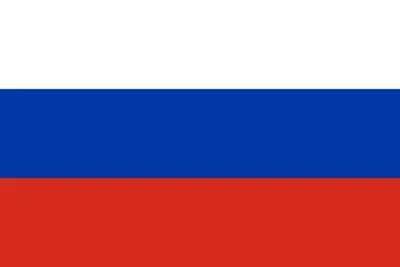
Russia, also officially known as the Russian Federation, is a transcontinental country in Eurasia. At 17,075,200 square kilometres (6,592,800 sq mi), Russia is the largest country in the world, covering more than one eighth of Earth's inhabited land area, and the ninth most populous, with over 146.6 million people at the end of March 2016. The European western part of the country is much more populated and urbanised than the East, about 77% of the population live in European Russia. Russia's capital Moscow is one of the largest cities in the world, other major urban centers include Saint Petersburg, Novosibirsk, Yekaterinburg, Nizhny Novgorod and Samara.
