John Stuart Mill Quotes
The love of power and the love of liberty are in eternal antagonism.
John Stuart Mill, 1806-1873, Member of Parliament, British Political Economist, The Subjugation of Women, 1869
Sourced by: Eigen's Political and Historical Quotations


With so many revolutionary rulers of new nations suppressing all opposition, the history of Ataturk and Turkey is unique. Ataturk was so popular and his People’s Party so successful that there was no opposition and Turkey had one party rule. However, Ataturk was determined to have Turkey become a parliamentary democracy as good as the Western nations of Europe. So a tradition of multi-party democracy was needed. So Ataturk actually went to his friend Fethi Okyar and asked him to start an opposition party and oppose the government. Fethi was a strong supporter of the revolution and generally was in concurrence with Ataturk and the People’s Party on everything. Ataturk however convinced him that they had to start a tradition that would take Turkey through the future, and he did create a new party-- Serbest Cumhuriyet Fırkası (Liberal Republican Party) and worked hard to find differences with the People’s Party and the Government. One immediate contribution was the oversight that the new party provided—a strong tradition that exists to this day in Turkey.

This is a very important quotation. It explains in great part, why there have been so few internal revolutions in Muslim countries. Al-Ghazi’s interpretation of Islamic Law and Theology concluded that even if the ruler is incompetent, corrupt, or destructive he should be supported and obeyed by all good Muslim citizens. The reason was that anarchy and/or chaos was an evil much worse for the Islamic community. There was one exception in the case of a ruler who was blasphemous or did not follow Islam. Then it was the duty of good Muslims. Since then, the ruler of an Islamic state, first seeks to ingratiated himself with the clergy. In Saudi Arabia, for example, the Royal Family gives enormous sums to all the clerics. They then urge dissidents and would be revolutionaries to accept the Royal Family with its flaws and shortcomings and accept their lack of freedom and human rights. And they tell all that the King and his family are all religious and support Islam. Therefore any revolt would be a tantamount to a sin. The Christian world had a different technique for inhibiting Revolution. Christian rulers claimed the Devine Right of Kings—that God had selected and ordained the king to lead. Regime change was contrary to the word of God. In a sense, the Islamic approach is more intellectually honest and seems to have worked much better than the Christians who have had so many revolutions. Better that is from the rulers point of view. From a democratic, Jeffersonian point of view revolting against an evil ruler was almost a moral obligation, and Al-Ghazali’s principle is all wrong and is keeping the Muslim countries from reaching democracy.


Charles I had caused the death of his subjects with impunity and was called to account. However, the English Parliament did not know what specific crime the King had committed. Kings had executed people, guilty of crimes and otherwise, for centuries. For what could a king be accountable. Cooke developed the crime of Tyranny and drew up and presented the indictment for that. The King was found guilty and executed. This was the first time in legal history that a ruler was called to account for crimes committed against his own people. It became the foundation for many trials thereafter including that of Saddam Hussein in 2006.

This is a very important quotation because it illustrates a characteristic of most South American (and many other world) cultures. Namely, that respect and dignity are more important than freedom. There is even a Spanish term conveying the importance of respect: Respecto! This is very different from the Anglo-American tradition where if one has freedom, he is little concerned with what others think of him, and no amount of respect would offset the loss of freedom. The person who is free, has the dignity that he needs. The importance of respect over freedom was also a major characteristic of European Fascism in the 1930s.
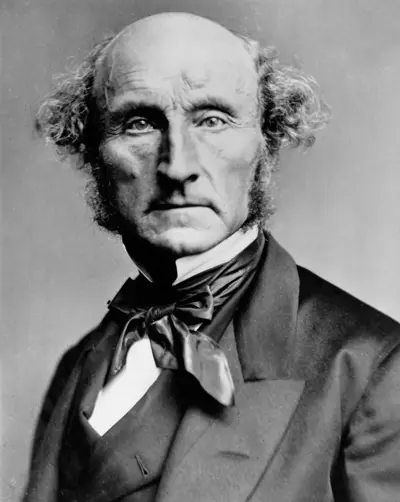
John Stuart Mill, usually cited as J. S. Mill, was an English philosopher, political economist, Member of Parliament, and civil servant. One of the most influential thinkers in the history of classical liberalism, he contributed widely to social theory, political theory, and political economy. Dubbed "the most influential English-speaking philosopher of the nineteenth century", he conceived of liberty as justifying the freedom of the individual in opposition to unlimited state and social control.
