Debbie Stabenow Quotes
The levels of poverty in 1933's rural America were unimaginable to us now. The 1933 Farm Bill, which introduced unprecedented government control over agriculture, was a reaction to the specific problems facing producers at that time.
Stabenow, Debbie. "Opening Statement on Farm Policy." Senate Committee on Agriculture, Nutrition, and Forestry, U.S. Government Publishing Office, 14 Mar. 2012.


Vladimir Lenin. The “war-time” referred to the Civil War in Russia which broke out after the 1917 Revolution where the Whites and the Reds fought for control of Russia.

For many nations, it is an important objective to be totally self-sufficient in their food supply—so that they would not have to depend in other nations in what might be a world famine or food supply. For those nations agricultural subsidies are useful if their farmers cannot produce as cheaply and efficiently as other nations do. In the United States, with the most efficient agriculture in the world, subsidies are a waste of public money {633243} and the result of lobbying and special interest pressure and or corruption {633245}.

Actually, the Agriculture Department was one of Lincoln’s greatest achievements. The subsidies and corporate welfare came much later. The biggest benefits were the land grant collages where agricultural research improved the yields and productivity and the Agricultural Extension provided training and technical assistance to American farmers making the United States the most efficient agricultural producer in the world. The subsidies and corporate welfare had and has nothing to do with the positive initiatives that Lincoln envisioned.

Actually, Kerry was incorrect, but he had a point, There are about 110,000 employees of the U. S. Department of Agriculture and every state has their own department of Agriculture with employees. There are about 2 million farms in America. So there is a government agriculture employee for about every 15 farms—a ratio that no other occupation shares.


America and several other nations object to the European Community agricultural subsidies in that they are an illegal trade practice under GATT to which all European nations are signatories. However, the US also makes agricultural subsidies but not to the same extent,
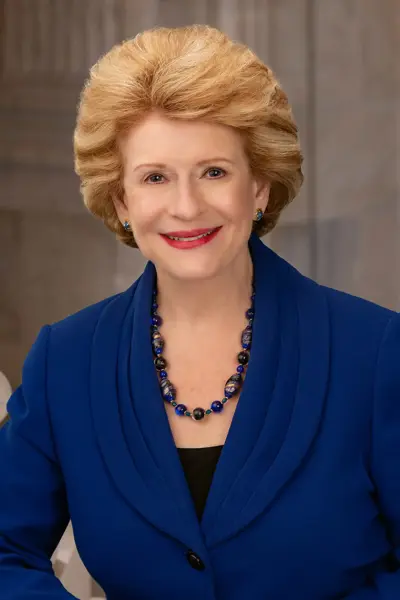
Deborah Ann Stabenow is an American politician serving as the senior United States Senator from Michigan, a seat she was first elected to in 2000. A member of the Democratic Party, she became the state's first female U.S. senator after defeating Republican incumbent Spencer Abraham. Before her election to the Senate, she was a member of the U.S. House of Representatives, representing Michigan's 8th congressional district from 1997 to 2001. Previously she served on the Ingham County Board of Commissioners and in the Michigan State Legislature.
