M. S. Swaminathan Quotes
All kinds of excuses have been given by governments for not implementing this recommendation like food price inflation. But the question is, do the farmers of this country, who constitute nearly half of the working population, also not need to eat?
Interview with M. S. Swaminathan. Frontline, vol. 29, no. 19, 22 Sep. 2012.


She advocates cutting out more of the middle men in the food chain and having the farmer earn more money. One difficulty with her idea is that the vast majority of farming today is done by large corporations who are already making a good deal of money and consumer groups do not want to further enrich these corporations at the expense of the consumer. However by buying directly from the small farmer who grows particularly good food, she can accomplish the objective on a small scale.


For many nations, it is an important objective to be totally self-sufficient in their food supply—so that they would not have to depend in other nations in what might be a world famine or food supply. For those nations agricultural subsidies are useful if their farmers cannot produce as cheaply and efficiently as other nations do. In the United States, with the most efficient agriculture in the world, subsidies are a waste of public money {633243} and the result of lobbying and special interest pressure and or corruption {633245}.


The House had been debating an agricultural subsidy bill. Family farmers had in certain years not been able to sell their produce for the cost of growing it and subsidies made up the difference. But in this particular year, farm prices were very high and the agricultural subsidies were “welfare for the rich.” Farmers who earned over a million dollars in a great agricultural year would get “subsidies.” Typically members of Congress were either opposed to agricultural subsidies or opposed. Congressman Kind had a more nuanced view.


American diplomats and experts were somewhat critical of European agricultural policies—especially the protectionism. Delors, whose political culture was French, where outside criticism was very much resented. America, while urging free agricultural trade, maintained heavy agricultural subsidies and protectionist measures itself. Most economists and politicians would like to open agriculture, but politically few have the courage to do so.


Vladimir Lenin. The “war-time” referred to the Civil War in Russia which broke out after the 1917 Revolution where the Whites and the Reds fought for control of Russia.


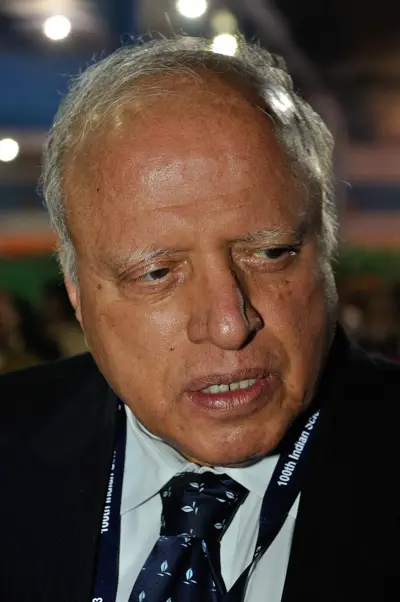
Mankombu Sambasivan Swaminathan is an Indian geneticist and administrator, known for his role in India's Green Revolution, a program under which high-yield varieties of wheat and rice were planted. Swaminathan has been called the "Father of Green Revolution in India" for his role in introducing and further developing high-yielding varieties of wheat in India. He is the founder of the MS Swaminathan Research Foundation. His stated vision is to rid the world of hunger and poverty. Swaminathan is an advocate of moving India to sustainable development, especially using environmentally sustainable agriculture, sustainable food security and the preservation of biodiversity, which he calls an "evergreen revolution."
