Arnold J. Toynbee Quotes
The legislation of the age about " vagabonds" is written in blood. The only remedy suggested was to punish the vagrant by cruel tortures—by whipping and branding. Even death was resorted to after a second or third offence; and though these penalties proved very ineffectual, the system was not abandoned till the law of 43 Elizabeth recognized that punishment had failed as a remedy
“43 Elizabeth” referred to the 43rd Law of her Reign. She instituted this then radical reform.
Arnold J. Toynbee, 1852–1883, English Economic Historian, Uncle of Arnold J. Toynbee, the English Historian, Description of English poverty and homelessness penalties in pre Elizabethan England, Lectures on the Industrial Revolution of the 18th Century in England
Sourced by: Eigen's Political and Historical Quotations


Livermore's argument fell on deaf ears, and the amendment was passed over the objection of a few arch-conservatives.

Both Puritans and Quakers were persecuted and physically abused in England by the Anglican Church. The Puritans as soon as they became dominant in part of the American colonies began persecuting Quakers. The Quakers who were the majority in the Pennsylvania colony, however were tolerant of other religions. This history was another of the many reasons the Founding Fathers wanted no established church. A “scorpion” was a type of whip that was particularly painful.
This quotation not only shows the conditions of the times, but illustrates that even in the middle of the 19th century the policy saw and appreciated the link between school, education, social class and juvenile delinquency. New York City became a national leader in terms of compulsory education and creating recreational opportunities for children.

The capital punishment debate was raging in Europe. Belgium and parts of Switzerland had just abolished the death penalty.

This is the earliest surviving attempt of the Romans to formulate a legal code.

The Black Plague, which raged in Europe from 1347 to 1349, had left relatively few able bodied people alive. Given this shortage of labor, even the beggars were forced to work in this form of “workfare”, thus outlawing private charity and welfare. See {611124} and {611125}


This appears to be one of the first expressions of the 'workfare' concept.


Manava Dharma Shastra. The Hindus believe in reincarnation and that the souls of animals move up the ladder and if they are good are eventually born as humans (Sudras). These are the lowest caste in this terribly discriminatory system—the “untouchables.” But if a Sudra lives a pious life and accepts his lot, he is reincarnated as a higher cast human (twice born). This law illustrates the incredible discrimination that the cast system produced. In modern India, the caste system is illegal and there is no discrimination in law or by government. However it is still terribly evident in social life, marriage, employment and most phases of Indian society. This text is a part of the Hindu Holy Texts. Hindus believe that Manu was a prophet whose text is revealed or inspired.

William the Conqueror. This is one of the first if not the first nationwide abolition of capital punishment in history. Ironically, the two alternatives that the abolition law allowed would both be illegal and repugnant to us today even though we allow capital punishment.


Queen Boudicca of the Iceni tribe had revolted in Roman Britain. The Romans where particularly harsh in putting down revolts but under Emperor Nero and Caligula after him, they sunk to the deepest of barbarities,


This has been the case in EVERY jurisdiction that has had capital punishment. Capital punishment does provide vengeance for victims, relatives and society. And in many societies execution is less expensive than prison for life. But it has never curtailed crime despite the example. In London, they used to have public executions as examples to inhibit crime. While the crowd was watching a pickpocket be hung, other pickpockets were relieving many spectators of their wallets and watches.


This quotation while difficult for us to fathom today, illustrates a very conservative 18th century view of punishment and law enforcement. The South African high court was very distressed that torture was to be ended. To them, and many others throughout the so called “civilized” European cultures of the time, capital punishment was not a very good deterrent—even for slaves. The execution was usually accompanied by horrible torture and cruelty before death. Slavery was such a horrible life, and the White colonists knew it, that death could be welcome (many slaves had committed suicide). So the suffering at the execution was to serve as a further deterrent. In reality it did not, any more than capital punishment did in the 20th century, but by the logic of the culture and the times, torture was needed as well as capital punishment.

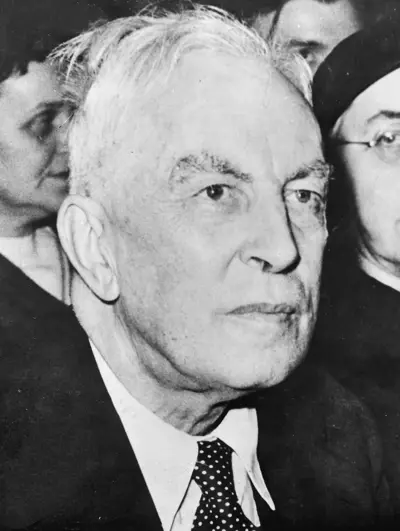
Arnold Joseph Toynbee CH FBA was a British historian, a philosopher of history, an author of numerous books and a research professor of international history at the London School of Economics and King's College London. From 1918 to 1950, Toynbee was considered a leading specialist on international affairs.
