Edward III Quotes
Because many sound beggars do refuse to labour so long as they can live from begging alms, giving themselves up to idleness and sins, and, at times, to robbery and other crimes-let no one, under the aforesaid pain of imprisonment presume, under colour of piety or alms to give anything to such as can very well labour, or to cherish them in their sloth, so that thus they may be compelled to labour for the necessaries of life
The Black Plague, which raged in Europe from 1347 to 1349, had left relatively few able bodied people alive. Given this shortage of labor, even the beggars were forced to work in this form of “workfare”, thus outlawing private charity and welfare. See {611124} and {611125}
Edward III, 1312-1377, English King, The Statute of Laborers; 1351
Sourced by: Eigen's Political and Historical Quotations

The Black Plague, which raged in Europe from 1347 to 1349, had left relatively few able bodied people alive. Given this shortage of labor there was a rapid inflation, especially to the distress of the landed class who had to pay much more for their food. The king therefore established what amounted to price controls, wage controls and forces labor. See {611125} and {611126}
This is one of the favorite quotations of students of labor relations. The Black Plague, which raged in Europe from 1347 to 1349, had left relatively few able bodied people alive. Given this shortage of labor, the price that workers could command rapidly increased. The wealthy were outraged that the law of supply and demand and the marketplace produced such a labor inflations and the king then passed this draconian decree that in effect was one of the early attempts at wage control. It went further in that the workers were required to work for the official wages and had no choice of not working at all. In effect, labor was drafted. See {611124} and {611126}

This appears to be one of the first expressions of the 'workfare' concept.


There were few if any consumer protection laws in those days and many wealthy aristocrats made their money by taking advantage of the poor. They were the landowners, bankers, financiers and often the industrialists. Shaw was a sarcastic social critic and this is a typical line he gave his upper class characters. Today, we have more controls on business and finance, and many wealthy business people have gotten that way by providing great value to the consumers and being honest. However, we still have large numbers of wealthy members of society who do make their money from the poor and middle class by unethical and often illegal means. In the aftermath of the Meltdown of 2008. hundreds of thousands of the homes of the working poor and middle class were foreclosed by the major banks forging the legal documentation for the foreclusures. Millions of consumer contracts are issued that even a PhD cannot understand the terms of without special legal and financial training. There is even a legal definition of a salesperson lying to make a sale which is so commonplace that our law excuses it and calls it "puffing". However, there has been over time, improvement over Shaw's era.

On observing unemployment in France while it was virtually unknown then in America:
This was quite unusual at the time when Kings were more interested in buying the loyalty and support of the rich and powerful nobles.

At the time, theft was a capital offense in England.


“43 Elizabeth” referred to the 43rd Law of her Reign. She instituted this then radical reform.


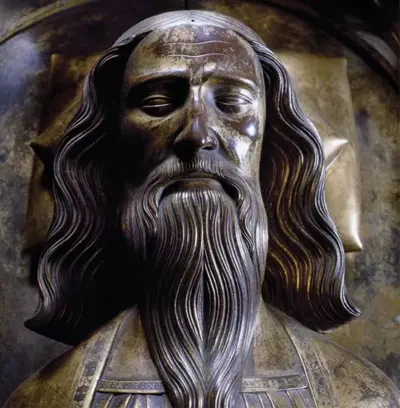
- Born: November 13, 1312
- Died: June 21, 1377
- Nationality:
- Profession:
Edward III, also known as Edward of Windsor before his accession, was King of England and Lord of Ireland from January 1327 until his death in 1377. He is noted for his military success and for restoring royal authority after the disastrous and unorthodox reign of his father, Edward II. Edward III transformed the Kingdom of England into one of the most formidable military powers in Europe. His fifty-year reign was the second-longest in medieval English history, and saw vital developments in legislation and government, in particular the evolution of the English Parliament, as well as the ravages of the Black Death. He outlived his eldest son, Edward the Black Prince, and the throne passed to his grandson, Richard II.
