Grover Cleveland Quotes
The law of nations is founded upon reason and justice, and the rules of conduct governing individual relations between citizens or subjects of a civilized state are equally applicable as between enlightened nations. The considerations that international law is without a court for its enforcement and that obedience to its commands practically depends upon good faith instead of upon the mandate of a superior tribunal only give additional sanction to the law itself and brand any deliberate infraction of it not merely as a wrong but as a disgrace. A man of true honor protects the unwritten word which binds his conscience more scrupulously, if possible, than he does the bond a breach of which subjects him to legal liabilities, and the United States, in aiming to maintain itself as one of the most enlightened nations, would do its citizens gross injustice if it applied to its international relations any other than a high standard of honor and morality.
Grover Cleveland, 1837-1908 22nd & 24th, President of the United States (Democrat, NY), Message to Congress withdrawing a treaty for the annexation of Hawaii from consideration, December 18, 1893
Sourced by: Eigen's Political and Historical Quotations


Prior to that the accepted phrase was “Law of Nations,” but soon after Bentham first used “International Law” it caught on and became widespread in the English Language. See Columbia Law Review, Vol. 5, No. 2, February 1905


This quotation has special historical significance in American political history. Conservative President Warren G. Harding first suggested that the United States join and recognize the authority of the International Court. Then Herbert Hoover, a Republican icon after his term of office, in his Inaugural Address, advocated the Court. However, many of his own party and some Democrats were opposed to the U. S. recognizing any international court. So Hoover bucked the leadership of his own party. The FDR administration in 1935 signed the protocol, but it was never ratified by the two thirds of the Senate that was needed to become American law. In the beginning of the 21st century, the Republican was rabidly in opposition to any International or world court even though Hoover and Harding were all for it.

The United States Senate must ratify all treaties before they can become effective. The Senate has been very reluctant to ratify treaties where the U. S. government or any of its citizens could come under the jurisdiction of any legal entity which did not abide by all the rights citizens are guaranteed by the U. S. Constitution. As a result, we do not recognize the World Court and the Treaty of Rome for example. The latter is the one that gives the World Court jurisdiction over a high level official who commits war crimes even in his own country. The result is that many dictators who do not want to be constrained by international law, do not sign the treaty fending off any pressure to do so by pointing to the United States. But Rothkopf and others who agree with him have not yet been able to come up with a mechanism that will assure American Constitutional rights to Americans who might be involved with the World Court and allow the court to punish the dictators who abuse their own population. The French would like their laws and constitution to control. The Russians, theirs. The Chinese, theirs. Every American public official takes an oath to defend The Constitution. That is their primary duty. Foreign policy and punishing international war criminals must take a lower priority.


It is a huge surprise for modern Republicans to discover that the great Republican President, Theodore Roosevelt, advocated strengthening the power of the World Court. 21st century Most Republicans consider this court and other international tribunals to be infringements on American sovereignty, and politicians who agree with Roosevelt as traitors.


Harding however made no effort to ever implement any such association in his tenure.

Individual countries are bound only by the treaties and compacts that they have signed and ratified. So very often someone will allege that a country has violated international law, but that nation may not have signed the Treaty or Compact that binds them, so thy may not be in violation at all whereas some other country in similar circumstances would be. Also, many countries (including the United States) sign treaties but take exception to some of the provisions. Then there are not bound by that provision. This is what makes International Law so complicated and difficult to understand.

Chavez frequently insulted officials and leaders of other countries. See linked quotes for examples.


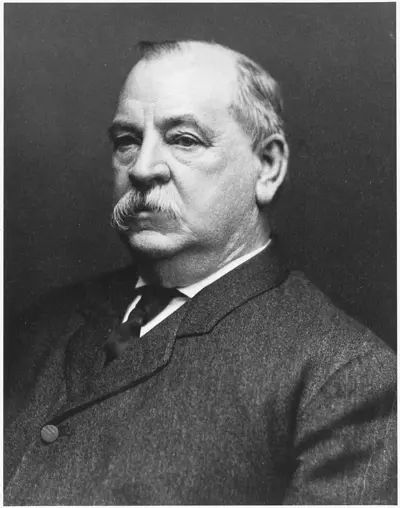
Stephen Grover Cleveland was an American politician and lawyer who served as the 22nd and 24th president of the United States from 1885 to 1889 and from 1893 to 1897. Cleveland is the only president in American history to serve two nonconsecutive terms in office. He won the popular vote for three presidential elections—in 1884, 1888, and 1892—and was one of two Democrats (followed by Woodrow Wilson in 1912) to be elected president during the era of Republican presidential domination dating from 1861 to 1933.
