Herbert Hoover Quotes
The Permanent Court of International Justice (the World Court) in its major purpose is thus peculiarly identified with American ideals and with American statesmanship. No more potent instrumentality for this purpose has ever been conceived and no other is practicable of establishment.
This quotation has special historical significance in American political history. Conservative President Warren G. Harding first suggested that the United States join and recognize the authority of the International Court. Then Herbert Hoover, a Republican icon after his term of office, in his Inaugural Address, advocated the Court. However, many of his own party and some Democrats were opposed to the U. S. recognizing any international court. So Hoover bucked the leadership of his own party. The FDR administration in 1935 signed the protocol, but it was never ratified by the two thirds of the Senate that was needed to become American law. In the beginning of the 21st century, the Republican was rabidly in opposition to any International or world court even though Hoover and Harding were all for it.
Herbert Hoover, 1874-1964, 31st President of the United States (Republican, IA), Inaugural Address, March 4, 1929
Sourced by: Eigen's Political and Historical Quotations


It is a huge surprise for modern Republicans to discover that the great Republican President, Theodore Roosevelt, advocated strengthening the power of the World Court. 21st century Most Republicans consider this court and other international tribunals to be infringements on American sovereignty, and politicians who agree with Roosevelt as traitors.


Those environmentalists who take this view do not give credence to other alternatives. For example, the same argument of environmental decision-making could logically justify one superpower nation taking over the government of all others on the planet for environmental matters. Another possibility is that the existing mechanisms and the UN are sufficient if the major powers reach agreement. Another is that science and technology will provide solutions.


The threat to which Rubin was referring was the fact that the United States, the largest dues payer to those organizations were in arrears on their dues—financially strapping the organizations. The reason for the arrears was a combination of 3 forces. There was conservative dissatisfaction with many of the policies and decisions of these international bodies. There was an effort to produce badly needed reform in those organizations, ranging from lack of transparency to toleration of massive corruption that was strongly resisted. Last, the United Nations was culturally very different from what Americans are used to with the diplomatic niceties taking precedence over candor and “telling it like it is, first class travel and accommodations for United Nations staff and consultants, sumptuous offices in many countries including America, and a civil service not based on merit but with quotas of nationality.
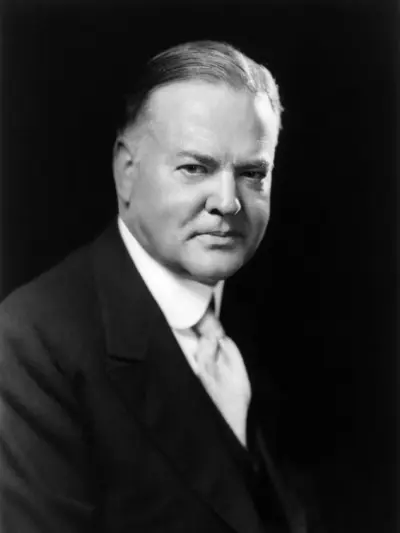
Herbert Clark Hoover was an American politician, businessman, and engineer, who served as the 31st president of the United States from 1929 to 1933. A member of the Republican Party, he held office during the onset of the Great Depression. Before serving as president, Hoover led the Commission for Relief in Belgium, served as the director of the U.S. Food Administration, and served as the third U.S. Secretary of Commerce.
