Roger Wolcott Sperry Quotes
The time has passed when nations should be allowed to do as they individually wish with regard to global matters, each striving solely in its own interests, with the more powerful now able to destroy all humanity and more. For the common good, we need to frame and abide by a higher system of law and justice, designed with less national, more godlike, perspectives for the preservation and welfare of the biosphere as a whole.
Roger Wolcott Sperry, 1913–1994, Neuropsychologist, Neurobiologist and Nobel Laureate, Toward a Higher System of World Law and Justice, 1986
Sourced by: Eigen's Political and Historical Quotations

Those environmentalists who take this view do not give credence to other alternatives. For example, the same argument of environmental decision-making could logically justify one superpower nation taking over the government of all others on the planet for environmental matters. Another possibility is that the existing mechanisms and the UN are sufficient if the major powers reach agreement. Another is that science and technology will provide solutions.


This quotation has special historical significance in American political history. Conservative President Warren G. Harding first suggested that the United States join and recognize the authority of the International Court. Then Herbert Hoover, a Republican icon after his term of office, in his Inaugural Address, advocated the Court. However, many of his own party and some Democrats were opposed to the U. S. recognizing any international court. So Hoover bucked the leadership of his own party. The FDR administration in 1935 signed the protocol, but it was never ratified by the two thirds of the Senate that was needed to become American law. In the beginning of the 21st century, the Republican was rabidly in opposition to any International or world court even though Hoover and Harding were all for it.


When he made this statement, the United States was the only nation that had the atomic bomb, but he and other leading nuclear scientists realized that it would not be long before the Russians would also have nuclear weapons, and other countries would so follow suit. He and some others saw a world government as the best way to cope with the nuclear proliferation problems. However, there was too much diversity of values and political ideology in the world to be accommodated in a single government, and the United Nations was the only thing that was practical and that was far from a government and had virtually no sovereignty. However, during the Cold War, Russia and the United States agreed on a Nuclear Proliferation Treaty and most nations of the world, agreed, so that for the issue of nuclear proliferation, the world had a type or world government—an international treaty. However, India and Pakistan did not adhere to it and developed nuclear weapons and North Korea was never a signatory. Other countries like Iran began to evade the treaty and since there was no real world government it was difficult to enforce the treaty throughout the world.

He was one of the first to recognize this phenomenon. See the related quotes for others who were early observers of the coming changes.

The Paris Agreement was an agreement within the United Nations Framework Convention on Climate Change (UNFCCC) dealing with greenhouse gases emissions mitigation, adaptation and finance starting in the year 2020. The language of the agreement was negotiated by representatives of 195 countries at the 21st Conference of the Parties of the UNFCCC in Paris and adopted by consensus on December 12, 2015. Never before in the history of the world had that many nations agreed on anything. Yet the United States Donald Trump administration, and a significant proportion of right wing and Tea Party Repoblicans actually believed that the threat of climate change was a hoax and at best the erroneous conclusion of "left wing" scientists. Within the wcientific community in the United State, there were very few major scientific issues for which there was almost unanamous consensus. Climat change and the role of humans in accelerating it was one of those.


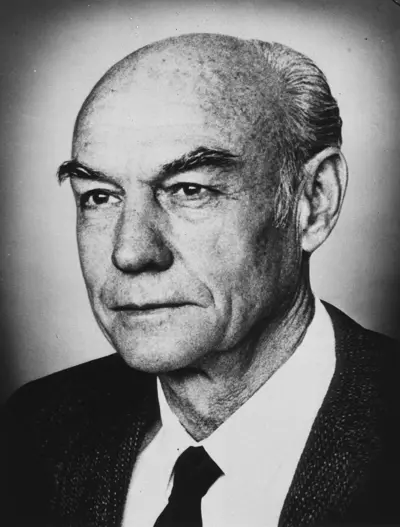
Roger Wolcott Sperry was an American neuropsychologist, neurobiologist and Nobel laureate who, together with David Hunter Hubel and Torsten Nils Wiesel, won the 1981 Nobel Prize in Physiology and Medicine for his work with split-brain research. A Review of General Psychology survey, published in 2002, ranked Sperry as the 44th most cited psychologist of the 20th century.
