Albert Einstein Quotes
Mankind’s desire for peace can be realized only by the creation of a world government.
When he made this statement, the United States was the only nation that had the atomic bomb, but he and other leading nuclear scientists realized that it would not be long before the Russians would also have nuclear weapons, and other countries would so follow suit. He and some others saw a world government as the best way to cope with the nuclear proliferation problems. However, there was too much diversity of values and political ideology in the world to be accommodated in a single government, and the United Nations was the only thing that was practical and that was far from a government and had virtually no sovereignty. However, during the Cold War, Russia and the United States agreed on a Nuclear Proliferation Treaty and most nations of the world, agreed, so that for the issue of nuclear proliferation, the world had a type or world government—an international treaty. However, India and Pakistan did not adhere to it and developed nuclear weapons and North Korea was never a signatory. Other countries like Iran began to evade the treaty and since there was no real world government it was difficult to enforce the treaty throughout the world.
Albert Einstein, 1879-1955, Nobel laureate in Physics, 1946, Quoted in Watchtower on line, http://wol.jw.org/en/wol/d/r1/lp-e/2004560?q=albert+einstein&p=par
Sourced by: Eigen's Political and Historical Quotations


Son of John Jay. Father of Harriet Beecher Stowe and Henry Ward Beecher


Historically, this quotation seems like an endorsement of motherhood, but it was an extremely important statement at the time. Eisenhower was convinced to run for the Presidency as a Republican in order to stop Senator Robert Taft and the conservative, isolationist, right wing of the Republican Party. These Republicans opposed American support of the United Nations. Eisenhower won the Republican nomination, then the general election, and clearly announced to the country and the world, that the moderate wing of the Republican Party was in control and the United Nations was an important part of our foreign policy.


Those environmentalists who take this view do not give credence to other alternatives. For example, the same argument of environmental decision-making could logically justify one superpower nation taking over the government of all others on the planet for environmental matters. Another possibility is that the existing mechanisms and the UN are sufficient if the major powers reach agreement. Another is that science and technology will provide solutions.


1st Earl Lloyd-George of Dwyfor. International organizations have been notoriously inept at protecting countries from aggression or minorities from persecution and ethnic cleansing and genocide. The Armenian genocide by the Turks was the exemplar at the time, but the UN peacekeepers refused to fight to prevent the Serbs from murdering 7,000 Bosnian Muslims. When they were protecting the Israeli-Palestinian borders, they did nothing to stop Arab Armies from attacking Israel right through the UN Troops. They did nothing to help prevent the Ruanda genocide. UN “troops” are rarely willing to risk their lives for the victimized people or the International Organization itself.


Actually it was the United States which insisted in the veto which required consensus of the great powers of the time. It was Russia which ended up using it far more often than any other nation.
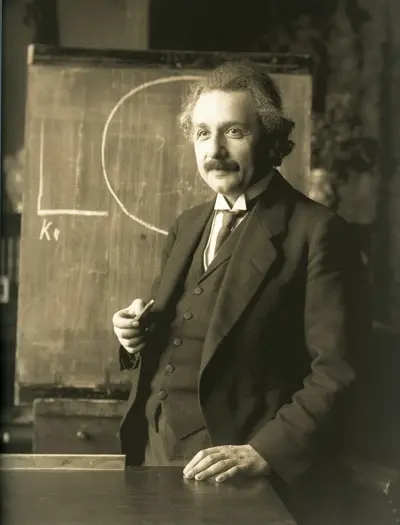
Albert Einstein was a German-born theoretical physicist, widely acknowledged to be one of the greatest physicists of all time. Einstein is known for developing the theory of relativity, but he also made important contributions to the development of the theory of quantum mechanics. Relativity and quantum mechanics are together the two pillars of modern physics. His mass–energy equivalence formula E = mc2, which arises from relativity theory, has been dubbed "the world's most famous equation". His work is also known for its influence on the philosophy of science. He received the 1921 Nobel Prize in Physics "for his services to theoretical physics, and especially for his discovery of the law of the photoelectric effect", a pivotal step in the development of quantum theory. His intellectual achievements and originality resulted in "Einstein" becoming synonymous with "genius".
