Levi Eshkol Quotes
The Holy Places shall be protected from desecration and any other violation and from anything likely to violate the freedom of access of the members of the different religions to the places sacred to them or their feelings with regard to those places. Whosoever desecrates or otherwise violates a Holy Place shall be liable to imprisonment for a term of seven years. Whosoever does anything likely to violate the freedom of access of the members of the different religions to the places sacred to them or their feelings with regard to those places shall be liable to imprisonment for a term of five years.
Levi Eshkol, 1895-1969, Israeli Prime Minister, Protection of Holy Places Law, 1967
Sourced by: Eigen's Political and Historical Quotations

This quotation illustrates that a narrow orthodox view of Islam is not the only one in Arab nations. Khaled is not an obscure cleric, but a popular television personality. While his views are considered heresy by many orthodox Muslims, the narrow view is by no means universal. Orthodox Islamists believe that God has commanded that all mankind be Muslims and the ones who are not are either ignorant so need to be “educated”, or evil and therefore should be killed. However, Muhammad ordained that an exception should be made for “Children of the Book”—Jews and Christians who revere the Old Testament. This was at a time when Christians would not allow any other form of worship but Christianity. Christianity, Judaism and most other religions have become tolerant of other religions and allow open alternative worship. Islam which early on led the way to tolerance, has in many countries gone back to the intolerance that existed amongst many Christians at the time of Muhammad.


Jefferson drafted the law which became the basis for the First Amendment to the Constitution. Others wanted change in some of Jefferson’s language to be Christian Centric but the delegates rejected that idea. See {623696}. The separation of church and state was not to be total. The state and the law was required to protect religion—all religions including those thought to be heretical.

Abdul Rahman, Afghan citizen, had converted from Islam to Christianity 16 years before. Conversion from Islam is a capital crime under Sharia Law which was the law of Afghanistan even after the Taliban had been overthrown. He was jailed and threatened with death. Statements like this and others made directly to the government persuaded the Afghan politicians to go against their mullahs who demanded the death penalty as is proscribed by Islamic Law—Sharia. The judges tried to get Rahman to recant and he would not (see {589518}). So they finally decided that he must be mentally insane and therefore could not be tried, and the problem was solved that way.

The re-conquest had just taken place where the Christians defeated the Islamic troops and the King found himself ruling extensive Muslim dominated areas like Toledo as well as large Christian areas. While atypical for a Christian Catholic King, Alfonso VI went out of his way to avoid a crisis with either religious group. He told the Muslims that they could follow Islamic practices and let it be known by statements like this that he had two religions in his kingdom.

At the time Turkey was the only Muslim majority country where there was coexistence with secularism but with Christians and Jews as well. Ataturk, the great Turkish leader, turned Turkey around, modernized it, Westernized it, and made it a secular state with freedom of Religion, much like the United States. However, Erdogan’s party was constantly trying to make the state more Islamic as his electoral base were the poor, religious, Muslims.


This was the second liberal constitution in the world following on the heels of United States Constitution upon which some of this constitution is based. See {585394}. This particular clause is noteworthy for its internal contradiction regarding freedom of religion. After making it illegal to convert any Catholic to any other religion, the constitution goes on to establish freedom of religion. So one was guaranteed the right to practice one’s own religion but if the religion advocated evangelizing and converting others, that part of religious freedom was banned when targeting Roman Catholics.


Abdul Rahman had converted from Islam to Christianity 16 years before. Conversion from Islam is a capital crime under Sharia Law. Rahman was charged but the judge demonstrating the tolerance of Islamic law said that Rahman would be given an opportunity to change his mind and re-embrace Islam and if he did so, he would be converted and not killed.
This problem which was so well described over a century ago in Egypt, still vexes most of the Islamic world.

Pen name: Jack Nipps. Leland was a Baptist evangelist who had worked with Thomas Jefferson and James Madison to secure Freedom of Conscience in Virginia. Many people think that ideas such as this are the views of irreligious men and women, but Leland was a devout, evangelical Baptist and Baptists suffered discrimination in early Colonial America. Freedom of conscience was essential for all religions who were not in the local majority. Tolerance essential. See 43,065.


While not in the Koran, this attributed statement is the basis for the ban on non-Muslims going on a Hajj and going to the most holy Muslim places—Mecca, Mina, Muzdalifa, and Arafat as well as the anti-religious hostility to all religions but Islam which is present in some Muslim countries.
Pen name: Jack Nipps

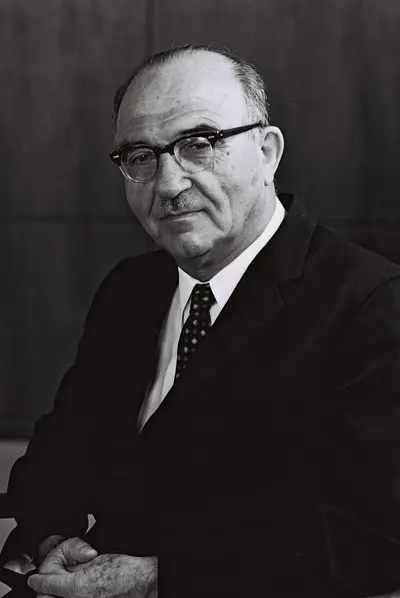
Levi Eshkol was an Israeli statesman who served as the third Prime Minister of Israel from 1963 until his death from a heart attack in 1969. A founder of the Israeli Labor Party, he served in numerous senior roles, including Minister of Defense (1963–1967) and Minister of Finance (1952–1963).
