Gustav Stresemann Quotes
The history of nations shows that words are not always immediately followed by action.
Stresemann, Gustav. "The New Germany." Nobel Lectures, Peace 1926-1950, edited by Frederick W. Haberman, Elsevier Publishing Company, 1972.

While it is true that thus far in human history war has been the only way, that does not necessarily mean that that is the only way. The establishment of free trade used to be only accomplished by force or arms or fear of such, but in modern times, common markets and trading zones are being created for economic and domestic desires for economic development. Even most non democratic countries have wanted to create a larger market for its goods and services and have joined larger organizations irrespective of military defeat and its fear. See {553984} for perspective and hope relating to this quotation.


With promises the success lies in following through and keeping the promise which is usually very costly. A threat that fails meanwhile can be the most expensive thing. We make a threat to deter a foreign power from something. Failure occurs when they are not intimidated and go ahead anyway. Then if we follow through on the threat, that is very costly—a war, a trade embargo, or whatever. Not following through on the threat is the costliest of all as we lose our credibility, trust and honor.

This is a view with which most diplomats and foreign policy strategist do not agree. They point to Hitler in WWII where Nazi Germany had enormous power but brought themselves to ruin via terrible strategic decisions that Hitler made. Declaring war on the United States, Invading Russia, and not developing nuclear weapons are 3 of the worst. Many argue that the United States strategy in invading Iraq and diverting resources from Afghanistan was a poor strategic decision.

L. P. Jacks


She and her husband, like many of the "America Firsters", believed that Hitler should be allowed to overrun Europe and Russia.


Lodge was particularly concerned that under the proposed treaty the United States would be obligated to support the League of Nations military efforts regardless of American public opinion or Congressional action.


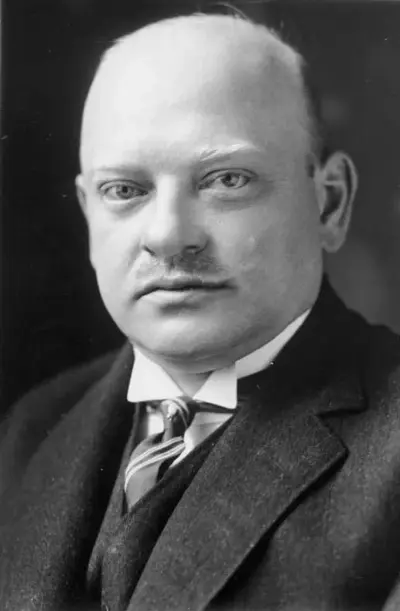
Gustav Ernst Stresemann was a German statesman who served as chancellor in 1923 (for 102 days) and as foreign minister from 1923 to 1929, during the Weimar Republic.
