Algernon Sidney Quotes
All the nations they had to deal with, had the same fate.
Sidney, Algernon. Discourses Concerning Government. Printed by J. Darby, 1698, ch. 2, sec. 23.


The great European powers were attending an International Congress—Summit Meeting of the heads of government and their diplomats to deal with the crisis of Tsarist Russian military expansionism. None of the other European powers of the time wanted or could afford war so Russia could only be thwarted by Great Britain. There were many in England who thought that the British should not even attend and should send troops immediately. The Queen and the Royal Family were among those. At the Congress Disraeli, who had much personal affection for Queen Victoria, wanted to reassure her. 1st Earl of Beaconsfield. If the Congress did not succeed the mainland of Europe would have been at war. Disraeli obtained everything England wanted. See Russian Ambassador Prince Gortchakoff’s observation.


The US Congress passed the Magnitsky Act which allowed parties to sue in American Courts, Russian companies and individual wrongs committed against Russian Citizens in Russia. (The Russian prison system controlled by some corrupt powers in Russia had killed Magnitsky for exposing some massive corruption of some Russian officials. Although morally justified, legally the act was an interference in another nation’s internal affairs.) The Russians then banned the adoptions which actually hurt them far more than the U. S., but it was a retaliation which to maintain their dignity and sovereignty the Russians felt was necessary. It is an excellent example of the lack of predictability and reaction to various foreign policy moves. Retaliation could take any form, related or not, proportional or not, rational or not.

L. P. Jacks


See Benedict Spinosa for an earlier absense or war view. Also, JFK more recently.
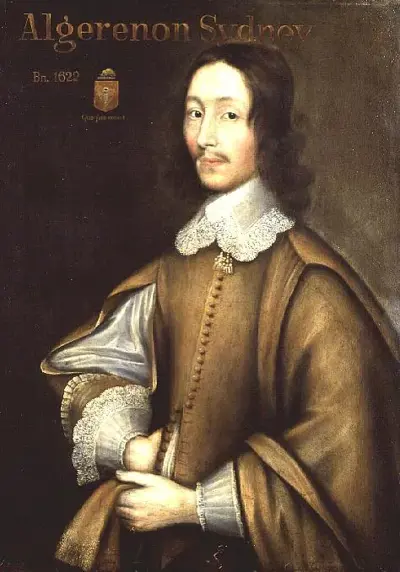
Algernon Sidney or Sydney was an English politician and member of the middle part of the Long Parliament. A republican political theorist, colonel, and commissioner of the trial of King Charles I of England, he opposed the king's execution. Sidney was later charged with plotting against Charles II, in part based on his most famous work, Discourses Concerning Government, which was used by the prosecution as a witness at his trial. He was executed for treason. After his death, Sidney was revered as a "Whig patriot–hero and martyr".
