Walter Lippmann Quotes
The history of diplomacy is the history of relations among rival powers which did not enjoy political intimacy and did not respond to appeals to common purposes. Nevertheless, ... to think that rival and unfriendly powers cannot be brought to a settlement is to forget what diplomacy is about.
Walter Lippmann, 1889-1974, Political Columnist, The Cold War, 1947
Sourced by: Eigen's Political and Historical Quotations

The Russians were breaking diplomatic relations with Israel.


While this was a common attitude for years before, the horrors of World War II produced a general revulsion to war and an awareness that war between two nations spills over to other states in the region and in an era of globalization, effects countries in other parts of the world. So there has been a tendency to use diplomacy endlessly, even after "things have gone too far". Historically, when things reached that point, the parties did fight it out, and when one was weakened sufficiently, negotiations and diplomacy could then be fruitful.


At the time of this quotation, he was the President of the America-Mexico Chamger of Commerce and his Mexican members were very anxious or disturbed by the prospect of Donald Trump being sworn in as President. Trump, during his presidential campaign, had courted many of the anti Hispanic voters and organizations, had labeled Mexican immigrants as "criminals" and "rapists", and had promised to build a very high wall accross the Mexican U. S, border and "make the Mexican's pay for it." Zapanta was also under consideration by President Elect Trump as the U. S. Ambassador to Mexico. These words were particualy well and delicately chosen to try and maintain his staning with with Trump and the Mexican leadership.

His appeal was also in the name of concurring heads of state of Finland, Holland, Denmark, Norway, Luxemburg, and Sweden.


When there is a serious problem with another country and it appears that military force may have to be used, he and most sophisticated policy makers argue that we should always try diplomacy first. If that does not work, then the military option is still open. If it does work, war or other military action is always available as an option. When politicians do not want to try diplomacy, it is usually that they have an ulterior motive for war and/or military force. Some urge caution with this principle in all cases as sometimes it gives the enemy time to regroup and rearm and he gets stronger by stringing out the negotiations with no intention of a diplomatic solution. In some other cases, as Iran in the second decade of the 21st century when they were suspected of developing a nuclear weapon. The Israeli right wing and some American conservatives wanted no delay in use of military force as that might allow the Iranians to complete an operational message. President Obama and most Americans favored strong economic sanctions with diplomacy first.


Kennan was talking about the Russians, but the same principle seems to hold with any autocratic government and in some cases even democracies. However, the tradition of secret diplomacy with no transparency is established even in many democracies. Great Britain and France, for example conduct most of their diplomacy in secret as do less democratic governments and tyrannies. They expect us to keep negotiations confidential, which causes American diplomats to be torn between the American view of transparency and the tradition of confidentiality.

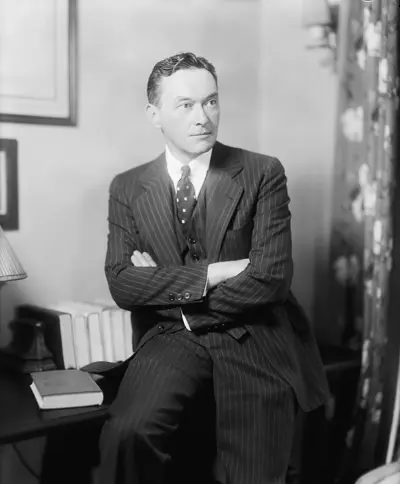
Walter Lippmann was an American writer, reporter and political commentator. With a career spanning 60 years he is famous for being among the first to introduce the concept of Cold War, coining the term "stereotype" in the modern psychological meaning, as well as critiquing media and democracy in his newspaper column and several books, most notably his 1922 book Public Opinion.
