Elihu Root Quotes
The growth of modern constitutional government compels for its successful practice the exercise of reason and considerate judgment by the individual citizens who constitute the electorate.
Root, Elihu. "Towards Making Peace Permanent." Nobel Lectures, Peace 1901-1925, edited by Frederick W. Haberman, Elsevier, 1972.


Meiji the Great. “Public Opinion” had the same meaning for the Japanese of this time as modern Western democracies perceive it with one exception. The public did not include all; it included only landlords— who owned land and had peasants on it. However, even asking them was an incredible step forward. The Emperor even sent formal written surveys to the landlords and in that sense, Japanese methodology of ascertaining public opinion was far ahead of the West. These reforms were opposed by the nobility and later the military, and by the 1930s there was no semblance of democracy left in Japan.


The Spanish colonization had been so exploitative that there was little of no infrastructure established in the Spanish colonies. Almost no institutions, no local government, existed, and there was no system of law or tolerance of minority views. Power controlled all and the Spanish (and Portuguese) were the power. When they were defeated, it was a bitter free for all in most cases unless there was a strong man and even they did not last long.


Anthony Ashley Cooper


This was his version of the governing body of a republican commonwealth. His assumption was that the ablest men would be the nobility, the educated and religious (Catholic) elite.


The photo is Rev, Hunting’s original house—a historical landmark in Connecticut.


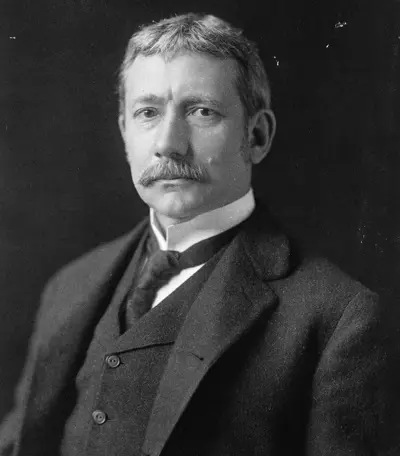
Elihu Root was an American lawyer and statesman who served as Secretary of State under President Theodore Roosevelt and as Secretary of War under Roosevelt and President William McKinley. He moved frequently between high-level appointed government positions in Washington, D.C. and private-sector legal practice in New York City. For that reason, he is sometimes considered to be the prototype of the 20th century political "wise man", advising presidents on a range of foreign and domestic issues. He was elected by the state legislature as a U.S. Senator from New York and served one term, 1909–1915. Root was awarded the Nobel Peace Prize in 1912.
