Noah Feldman Quotes
The great difficulty with Guantanamo is it was perceived correctly as being a place where people were not being detained subject to rules. I don't think the world thinks that you can't detain suspected terrorists - the world thinks you can do that, but you have to do it pursuant to rules and to clear charges.
Feldman, Noah. Interview. Bill Moyers Journal, PBS, 19 Feb. 2010.


Major Fleener had been assigned to defend accused terrorists who were being held at the military prison in Guantanamo, Cuba. For several years they were held without a hearing or trial. Then the U. S. Supreme Court ruled that they had to be given a hearing or trial. A Military tribunal was selected. The methods and procedures of these hearings came under much public world-wide criticism as they did not meet the normal legal standards of most countries. Surprisingly, one of the military officers made public statements criticizing the army and the trials.

Rejecting criticism of military courts trying and executing terrorists without any appeals process:

Chelsea Elizabeth Manning


The problem that was facing the nation in the early 21st century was when we captured a terrorist, was he a combatant or was he accused by a personal enemy, and had he been tortured to say he was a terrorist. The issue grew more complicated when terrorist suspects were brought to American territory at Guantanamo Bay, and the Courts have always held that a foreigner on American soil had a right to have access to the Federal Courts just as Citizens do. Complicating the situation more was the fact that a few American citizens had joined the terrorists and were they entitled to a civilian trial as all other Americans were.

Even in the United States, there have been occasions where this has happened such as the Japanese American internment in WWII, and the George W. Bush Administrations actions in fighting the War on Terror. Yew was in opposition at the time he made this famous statement. 30 years later when he was the Prime Minister, he had a different view. See {585201}.


During that period some terrorists were handed over to Saudi Arabian and Egyptian authorities for interrogation. These countries had no qualms about torture. Goss never answered the question about that practice.

The press were asking about the claim that the United States were sending detainees (“rendition” it is called) in the War on Terrorism to countries where they are tortured in ways that United States law prohibited. This quotation is an excellent illustration of the nuanced language that is sometimes used by politicians with the press. For example this statement was made in the Press Conference about our Human Rights Annual report. In it specific countries were named and accused of torturing prisoners or suspects. The press had learned that detainees had been renditioned to those same countries. Lowenkron went on to explain that U. S. officials had explained to officials of the countries to which detainees had been renditioned that the detainees should not be tortured; therefore they did not BELIEVE that they would be. So the statement was “correct” whether or not they detainees had been tortured. In another nuance, some people wondered what “we” meant—the United States or the State Department. Perhaps the State Department followed this policy and practice but the CIA may not have.

It is surprising that these ideas would come from one of the most autocratic powerful monarch in the world at the time. However there were many very liberal influences on her from Europe. This set of proposals she even sent to Voltaire to get his feedback and criticism. As late as 2006 the American President was reluctant to outlaw torture for terroristsand the Vice President actually argued for its retention as an interrogation technique. Over 300 years earlier the autocrat of Russia argued against it.


The George W. Bush Administration attempted to avoid compliance with American Law and the Constitution by keeping captured terrorists in a Naval Base in Guantanamo, Cuba, and claiming that the American law did not there prevail. The Supreme Court twice ruled that the practices of the Administration in dealing with Terrorist prisoners violated the law and the Constitution. Meanwhile world public opinion was very opposed to the Bush Administration practices with captured war combatants which had never been attempted by any other administration. Finally President Bush in June of 2007 announced that Guantanamo would be closed.
The executive order gave the power to the Secretary of the Treasury to block and freeze assets of anyone or any organization that was assisting the insurgents and abetting the internecine violence in Iraq. Typical of many George W. Bush efforts, the idea was a good one and indeed necessary, but the way it was implemented was very poor. Bush was always trying to seize more power for the Executive Branch and wanted as little judicial review as possible. Under the Executive Order if any organization were accused of assisting the insurgents and a lawyer defended them from having their assets blocked, then the lawyer could also have his assets blocked as he was “assisting” the offending organization. The purpose was to prevent undemocratic elements from thwarting democracy in Iraq, but the method implemented was itself quite undemocratic—a contradiction that Bush found himself in very often. Allowing for judicial approval before seizure would have helped a great deal.

In the aftermath of 9-11, there was a call for giving the law enforcement agencies more authority and the Patriot Act was passed in haste and fear. Some law enforcement personnel then went about picking up Arab Americans and in many cases holding them incommunicado without any charges. No terrorists were discovered by this process and yet good American citizens were abused, traumatized and insulted. In our zeal to protect American freedom, we actually began to resemble some of the capricious and abusive practices of our undemocratic enemies. There were other abuses allowed under the Patriot Act, but at the time of this writing the extent had not yet been revealed, but the refusal of the authorities to make public the national security benefits suggests that there was not much national security benefit and much abuse.
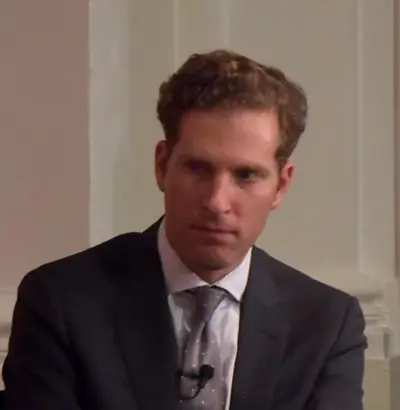
Noah R. Feldman is an American academic, author, columnist, public intellectual, and host of the podcast Deep Background. He is the Felix Frankfurter Professor of Law at Harvard Law School and chairman of the Society of Fellows at Harvard University. His work is devoted to constitutional law, with an emphasis on free speech, law & religion, and the history of constitutional ideas.
