Catherine the Great Quotes
What right can give anyone authority to inflict torture upon a citizen when it is still unknown whether he is innocent or guilty?
Catherine II. The Grand Instruction to the Commissioners Appointed to Frame a New Code of Laws for the Russian Empire. Printed for T. Becket and P.A. de Hondt, 1768, p. 101.


The choice is usually contrasted between guilty persons going free, rather an innocent one be adjudicated guilty. But here the justice tells us that the avoidance of an innocent person being subject to easy arrest is important enough to have a system where guilty people sometimes escape justice.


At that point they were imprisoned in Guantanemo, a military facility in Cuba.


The call for individual liberty and the right of personal property by clergy is surprising to many. This Cahier was the consensus of the Clergy of Blois in 1789. There were cahiers of several provinces of France—some by the clergy, some by the nobles. What is fascinating is the emergence of many of the pre-Revolutionary French concepts. The example of the American revolution and its principles was known throughout the educated classes of France.


It is ironic that Pakistan, the creation of Jinnah’s efforts, has to a great extent adopted Sharia (Islamic Law) resulting in severe curtailment of freedom of speech and thought. Professors languish in jail for not teaching the history of Muhammed in the orthodox way, people are sentenced to death for what the local mullahs regard as blasphemy—results which from Jinnah’s point of view were terrible.

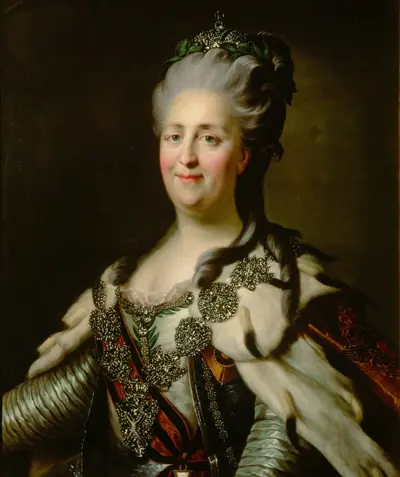
Catherine II, most commonly known as Catherine the Great, was empress regnant of All Russia from 1762 until 1796 – the country's longest-ruling female leader. She came to power following a coup d'état that overthrew her husband and second cousin, Peter III. Under her reign, Russia grew larger, its culture was revitalised, and it was recognized as one of the great powers of Europe.
