Christian Rakovsky Quotes
The first and most important factor is product quality. It is enough to open any number of any newspaper to be convinced that matters here are truly catastrophic. No agitational, administrative, or legal measures can halt this steady deterioration of quality …. we are dealing not with individual defects, but with the systematic production of defective products (brak). The ash content of coal has been rising sharply, in some cases reaching 18 per cent. Only twenty per cent of bricks will support the established load norms. The situation in light industry is even worse, where the textile industry has set a record. According to frequently quoted data, brak among “clean” products (i.e., those that have slipped through quality control) averages fifty per cent for the various [textile] trusts
The poor quality of Soviet industry was well known in 1930. The press was then able to write about such things. When Stalin solidified his hold on the Soviet Union, the quality got no better, but the press was no longer allowed to discuss it. Rokovsky was send to prison where he died.
Christian Rakovsky, 1873-1941, Russian Ambassador to France, Premier of the Soviet Ukraine, The Five Year Plan in Crisis: The Question of Product Quality, 1930
Sourced by: Eigen's Political and Historical Quotations

This quotation Incorporates the famous observation of Joseph de Maistre that "every nation gets the government it deserves." {606135}.


Catledge came to California to cover the gubernatorial race between incumbent Republican Governor Merriam and writer Upton Sinclair, an avowed socialist who was running neck and neck. Palmer was then the Political Editor of the Los Angeles Times and his newspaper never covered anything Sinclair did for the campaign and only covered Merriam. Catledge observed that this was not only unfair but poor journalism.


After being castigated by the Pope, Lameddais broke with the Church and concentrated on publishing and politics.

Abe Rosenthal, statement to a reporter who he fired for having an affair with a politician, and continuing to cover his politics. There are multiple variations of this quote in circulation – this seems to be the most accurate.


It was not true in 1922, nor has it been true since despite the fact that this is claimed and sincerely believed by some Americans. This has been a canard of a small minority of conservatives and radical leftists.
Ronald Reagan’s media expert, Michael Deaver, developed a new approach to Presidential appearances. He realized that if the President made a 5 or 10 minute speech at an event, the Evening News would choose one or two 10-15 second excerpts, and that was what the vast majority of the country would see. Therefore, he reasoned, the words spoken meant relatively little. It was the image what would last in people’s memory. Therefore, he worked hard to concentrate on getting the right background for the President’s appearance. The Statue of Liberty, a naval ship, a factory at work. The set of images that people would have of the President in these different appearances would define the President in the minds of most people. Deaver would be more concerned that the TV camera’s showed the background scene he had planned (rather than a strange angle or just a close-up of the President’s face) than he would be about which words—sound bytes—the TV station would select. Hence Baker’s observation that words were less important than the TV images.


The queen was a lot more sophisticated about the newspapers than politicians in the 21st century.

Tolstoy was a major opponent of censorship. However this quotation is frequently used to support the importance of censorship.


Stalin was very astute in realizing the power of the press and the modern media. As a result, his solution was to not only develop a strong party media apparatus, but deny any contrary groups the fight to press and media. He was so effective at media control that most dictators and theocrats would thereafter model the Russian system of monopoly control over the media.


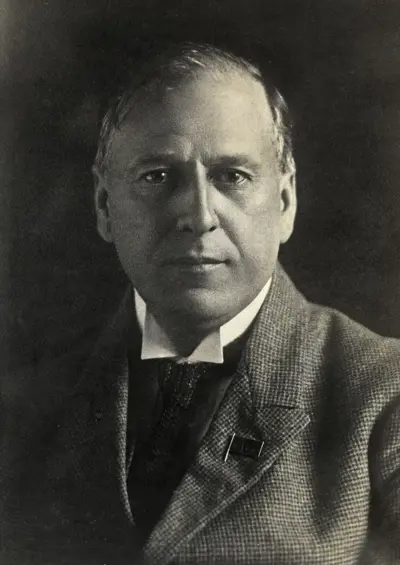
Christian Georgievich Rakovsky was a Bulgarian-born socialist revolutionary, a Bolshevik politician and Soviet diplomat; he was also noted as a journalist, physician, and essayist. Rakovsky's political career took him throughout the Balkans and into France and Imperial Russia; for part of his life, he was also a Romanian citizen.
