Anastas Ivanovich Mikoyan Quotes
When one millionaire has ten newspapers and ten million people have no newspapers—that is not freedom of the press.
Anastas Ivanovich Mikoyan, 1895-1978, Vice Premier of the Soviet Union, Statement to Time Magazine Reporters about Freedom of the Press in America, January 26, 1959
Sourced by: Eigen's Political and Historical Quotations


This statement demonstrates the transformation from the Communist era where the press was considered simply as another organ of the state. Before that, it was an instrument of the Czar. This is one of the world’s most firm statements of journalistic independence although recent Russian regimes have moved to limit journalistic independence.


Note how the second paragraph nullifies the first of the government declares an emergency. This is a trick that is very common in constitutions.

Vladimir Lenin. Lenin was echoing criticisms that were made the world over and even by some in the United States. However, his solution to have the press controlled by the ruling party just changed the cast of characters who were propagandizing and distorting the truth. Lenin was not able to offer a better solution nor were others. However, with enough affluence the capitalist society produced enough different publishers all competing that one did not dominate public opinion. With technology of TV and the Internet, the bar to entry is so small that almost anyone can be a publisher and find an interested market. In a way technology has solved much of the problem for capitalistic and totalitarian societies alike. In the latter, even censorship is not easy or feasible on a large scale.


He was commenting on the new Donald Trump's attacks onthe media.


Two decades later Jefferson, after his Presidency, had developed a different attitude towards the press. See {585116}.


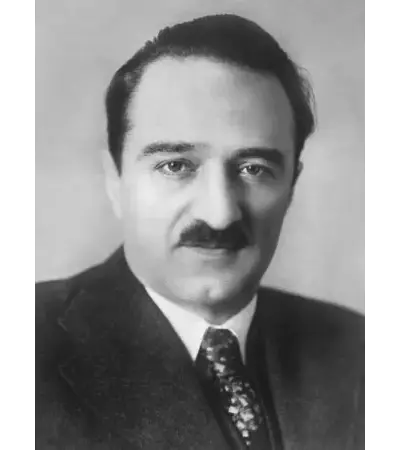
Anastas Ivanovich Mikoyan was an Armenian Communist revolutionary, Old Bolshevik and Soviet statesman during the mandates of Lenin, Stalin, Khrushchev and Brezhnev. He was the only Soviet politician who managed to remain at the highest levels of power within the Communist Party of the Soviet Union, as that power oscillated between the Central Committee and the Politburo, from the latter days of Lenin's rule, throughout the eras of Stalin and Khrushchev, until his peaceful retirement after the first months of Brezhnev's rule.
