John Stuart Mill Quotes
The disease which inflicts bureaucracy and what they usually die from is routine.


The conservative newspaper was describing a leading Congressional conservative, Tom Delay. Delay had been cited three times by the bipartisan House Ethics Committee. He was also accused of many other unethical activities and he was under criminal investigation in his home State of Texas for violation of the campaign finance laws. The Beltway refers to the Beltway highway around Washington DC within the bounds of which most politicians and lobbyists work and live.


His appointment as U. N. Ambassador was very controversial as he had a long record of opposition to the United Nations. In this quotation he was alluding to the traditional diplomatic methodology of providing “carrots and stick” in foreign policy.


Gates was then a mid-level functionary at the CIA. His ability to tell the truth to powerful people got him promoted and he eventually became director himself as well as the Secretary of Defense. The Department of Agriculture at the time was generally known as a very bureaucratic organization.


He confuses modernity and religion. Muslims who live in a modern world have the same degree of bureaucracy then the Christians, Jews, Hindus, Buddhists and other religions do. The Muslims of America have the same degree of paperwork as other Americans, and the Turkish bureaucracy has as much filing and other paperwork as countries where the majority of people are of different religions. Historically, when England and France and other Christian countries were in the Dark Ages, Islamic bureaucrats kept Western and Eastern knowledge alive, and when the Ottoman Empire ruled most of the known world, they almost collapsed under their very heavy bureaucracy.
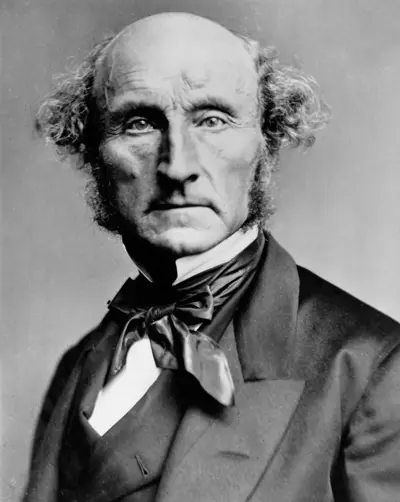
John Stuart Mill, usually cited as J. S. Mill, was an English philosopher, political economist, Member of Parliament, and civil servant. One of the most influential thinkers in the history of classical liberalism, he contributed widely to social theory, political theory, and political economy. Dubbed "the most influential English-speaking philosopher of the nineteenth century", he conceived of liberty as justifying the freedom of the individual in opposition to unlimited state and social control.
