Richard Armitage Quotes
The development of weapons of mass destruction and the missiles to carry them would be a very destabilizing effect, should Iran be able to accomplish that.
Armitage, Richard. Press Briefing. U.S. Department of State, 2004.


At the time Iran was claiming that its nuclear program was for atomic energy only.


This rhetoric turned out to be just that. When Israel developed a nuclear capability, the Egyptians became more rational and sobered. It was Anwar Sedate however who was the Egyptian leader wise enough and strong enough to make peace with Israel.


This quotation represents a colossal failure of politicians to understand science and the way that it works. They assumed that the processes and methods were secrets that if kept secret, would prevent others from constructing an atomic bomb. The reality was that the most important “secrets” had emanated from Einstein’s Theory of Relativity and other published scientific papers. So any competent physicist knew immediately how the bomb worked. A triggering mechanism would need to be developed but that was just a complicated engineering project. The largest barrier was the supply of enough radioactive material with sufficient purity. That then (as today) took a lot of money and some time. But after the initial bomb, the secrets might speed things up but were not necessary. That is why the French and the Russians quickly developed their bombs, and why it did not take the Israelis long once the had decided to invest the resources. China, India and Pakistan did not need the secrets either when much later, they decided to develop nuclear weapons. With the atomic bomb, spying and obtaining secrets shorten the required time and reduce the cost, but are not necessary. This is why nuclear proliferation is so hard to stop.
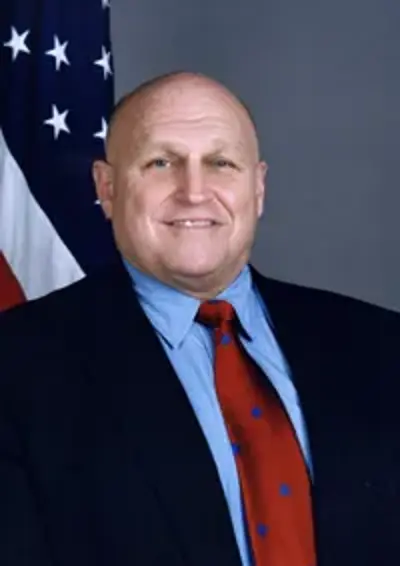
Richard Lee Armitage is an American former diplomat and government official. A graduate of the United States Naval Academy, Armitage served as a U.S. Navy officer in three combat tours of duty in the Vietnam War as a riverine warfare advisor. After leaving active duty, he served in a number of civil-service roles under Republican administrations. He worked as an aide to Senator Bob Dole before serving in various posts in the Defense Department and State Department.
