Glenn Greenwald Quotes
The core distortion of the War on Terror under both Bush and Obama is the Orwellian practice of equating government accusations of terrorism with proof of guilt. One constantly hears U.S. government defenders referring to 'terrorists' when what they actually mean is: those accused by the government of terrorism.
Greenwald, Glenn. With Liberty and Justice for Some: How the Law Is Used to Destroy Equality and Protect the Powerful. Metropolitan Books, 2011.


The choice is usually contrasted between guilty persons going free, rather an innocent one be adjudicated guilty. But here the justice tells us that the avoidance of an innocent person being subject to easy arrest is important enough to have a system where guilty people sometimes escape justice.

There are many who do not agree with Hayden’s thesis that there was a national consensus about the degree of compromise with Constitutional rights. It is the case that the 3 Presidents maintained a continuity, but there was no great outcry of public opinion for roundups and arrests of Muslims after 9-11. The government never at the time revealed the data on what they were doing. When that became public, it was clear that there was no consensus as was the case with torture. The military authorities who interned American Citizens of Japanese Origin argued that there was little public opposition but many citizens did not even know it was happening, and the ones who did, for the most part, thought that it was only the suspected saboteurs and spies who were interned, not American citizens who were suspected of nothing; not little children; not 90 year old men and women. When the facts were known Americans did form a national consensus—that it was one of the worst practices in which the United States ever engaged.

Johnson, fundamentally an inveterate racist, tried to kill all attempts at protecting Negro rights after the Civil War. Congress rewrote the Bill to obtain enough signatures and then passed it over the President’s Veto later in the year.

The executive order gave the power to the Secretary of the Treasury to block and freeze assets of anyone or any organization that was assisting the insurgents and abetting the internecine violence in Iraq. Typical of many George W. Bush efforts, the idea was a good one and indeed necessary, but the way it was implemented was very poor. Bush was always trying to seize more power for the Executive Branch and wanted as little judicial review as possible. Under the Executive Order if any organization were accused of assisting the insurgents and a lawyer defended them from having their assets blocked, then the lawyer could also have his assets blocked as he was “assisting” the offending organization. The purpose was to prevent undemocratic elements from thwarting democracy in Iraq, but the method implemented was itself quite undemocratic—a contradiction that Bush found himself in very often. Allowing for judicial approval before seizure would have helped a great deal.


It is surprising that these ideas would come from one of the most autocratic powerful monarch in the world at the time. However there were many very liberal influences on her from Europe. This set of proposals she even sent to Voltaire to get his feedback and criticism.


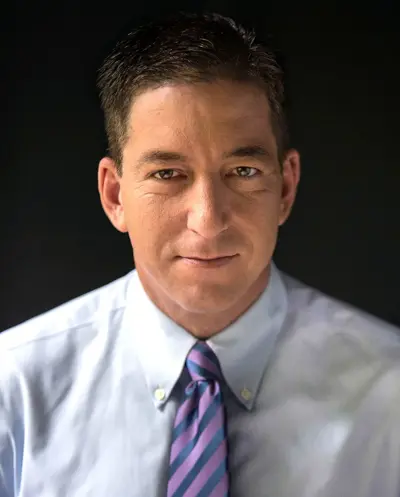
Glenn Edward Greenwald is an American journalist, author, and former attorney.
