William Murray Quotes
The constitution [of England] does not allow reasons of State to influence our judgment: God forbid it should! We must not regard political consequences; how formidable soever they might be; if rebellion was the certain consequence, we are bound to say, Fiat justitia, ruat coelum
"Let justice be done, though the heavens fall." This quotation, usually in Latin, is inscribed on several courthouses throughout the country. 1st Earl of Mansfield
William Murray, 1705-1793, Lord Chief Justice of England, Rex v. Wilkes, 1770
Sourced by: Eigen's Political and Historical Quotations


This was the origin of John Adams famous quotation {592690}.


This quotation is a more sophisticated statement of the Magna Carta clause {583716}. Note that English law allowed redress against all other people including religions officials and government temporal officers. And everyone was entitled to justice and access to the courts including outlaws or people who have been excommunicated. In many countries these people do not have the protection of the law. This tradition allows prisoners in jail to sue the jailers for example. And imagine a person who had been excommunicated as a heretic and yet allowed to live turning around and suing clerics who were persecuting him in an Islamic nation other than Turkey.


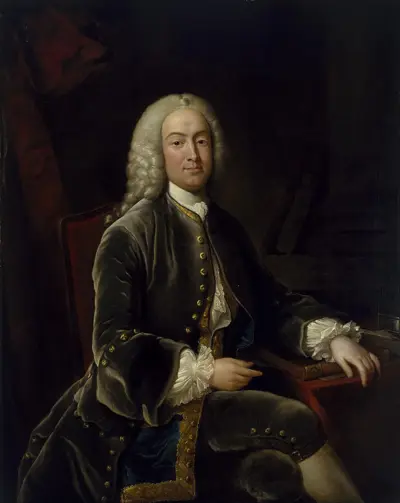
William Murray, 1st Earl of Mansfield, PC, SL was a British barrister, politician and judge noted for his reform of English law. Born to Scottish nobility, he was educated in Perth, Scotland, before moving to London at the age of 13 to take up a place at Westminster School. He was accepted into Christ Church, Oxford, in May 1723, and graduated four years later. Returning to London from Oxford, he was called to the Bar by Lincoln's Inn on 23 November 1730, and quickly gained a reputation as an excellent barrister.
