Klemens von Metternich Quotes
The commission shall be a joint investigation, as thorough and extensive as possible, of the facts relating to the origin and manifold ramifications of the revolutionary plots and demagogical associations directed against the existing constitution and the internal peace both of the union and of the individual states; of the existence of which plots more or less clear evidence is to be had already, or may be produced in the course of the investigation... .
This commission was the intellectual forerunner of the House Un-American Activities Committee (HUAC) and McCarthyism. Metternich called a conference of the heads of all the German states to deal with what they perceived as a dangerous liberalism enveloping German society. Metternich did not personally draft all the resolutions but he controlled the conclave and all the resolutions which are usually ascribed to him.
Klemens von Metternich, 1773-1859, Austrian Statesman & Diplomat, Carlsbad Resolutions, August 1819
Sourced by: Eigen's Political and Historical Quotations


Metternich called a conference of the heads of all the German states to deal with what they perceived as a dangerous liberalism enveloping German society. Metternich did not personally draft all the resolutions but he controlled the conclave and all the resolutions which are usually ascribed to him.

It is often said that “elections have consequences”. The 1960 election was one that certainly had profound consequences. Lincoln was unwilling to force the Northern states to return fugitive slaves against the constitution, laws and will of the people of those states as Buchanan said he was (but had a hard time doing). Also Lincoln was unwilling to allow new territories to enter the union if they allowed slavery. In the end, most pro Slavery politicians realized that with the greater growth rate of the North, they Southern disproportionate power in the Congress was doomed as would be the institution of slavery itself. Crittendon a strong Unionist from a border state, understood the implication of Lincoln’s election for the Union.

There was some political pressure in the North, to offer terms to the South where they could cease the rebellion and return to the Union and return to the status quo ante—before the rebellion.


Even before the Russian Revolution there was a Red Scare in America based on the writings of Marks and Engels. Labor Unions were automatically viewed by ultra-conservatives as Communistic and revolutionary. Ironically, the greatest offence that the President committed in many eyes was to have labor leaders to the White House for lunch or dinner or, as he did with the coal strike crisis, have labor negotiators in the White House for mediation. The symbolism of accepting these “radicals” as worthy citizens, in some conservative views, elevated the labor movement to a much higher status than they deserved and to treat them with the same dignity and respect as corporate executives was very offensive. Roosevelt had been made an honorary member of the Locomotive Engineers Union, and this enabled the Sun and other critics to say that Roosevelt joined labor organizations.


China had learned to grow new crops from the Americas and their greater ability to produce food led to large population growth which was straining the other national resources and the economy, technology and government could not handle the growth, producing much unhappiness and discontent.

The Empress had earlier decided not to try and suppress the Boxers when they started attacking foreigners--{641838}. But now things had gotten out of hand and many ordinary Chinese people—especially Chinese Christians-- were suffering Boxer abuse. Cixi thought the government had to “ally” with the Boxers in the hope that she could influence directions in the future. This, of course, made her anathema in the West and forever damaged her reputation and legacy in Western history.

. We cannot suffer a foreign government to allow plots to our polity to be hatched on its territory!
The assassins and plotters who murdered the Archduke of Austria in Sarajevo were 5 Serbs and a Bosnian. They planned their operation in Serbia. This was the excuse that Austria was giving for going to war with Serbia who had an alliance with Russia.


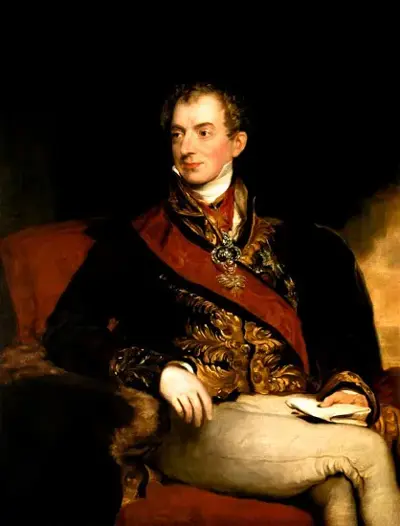
Klemens Wenzel Nepomuk Lothar, Prince of Metternich-Winneburg zu Beilstein, was an Austrian diplomat who was at the center of European affairs for three decades as the Austrian Empire's foreign minister from 1809 and Chancellor from 1821 until the liberal Revolutions of 1848 forced his resignation.
