Ida B. Wells Quotes
The city of Memphis has demonstrated that neither character nor standing avails the Negro if he dares to protect himself against the white man or become his rival.
Wells, Ida B. Southern Horrors: Lynch Law in All Its Phases. The New York Age Print, 1892, p. 18.


Early in his career Grant was a young lieutenant assigned to a Western outpost. His wife was worried about the Indians.


Johnson was the first Black man who won the heavyweight championship at a time when racism in America was rampant. Many whites referred to Jeffries as “The Great White Hope” who would take the champion back for the whites. He didn’t and was beaten badly.


Bilbo was one of the worst racists who ever served in the Congress.


Charleston was in the Southern part of the state where most people supported slavery. Douglas made an unequivocal pitch for the racist vote {600060} and forced Lincoln to take a stand. Like many politicians today, Lincoln decided to give the audience what they wanted to hear. It is not clear whether or not he ever believed this statement or was just pandering in a political campaign. He had never said this in the Northern part of the state of before. Lincoln’s views on race changed and matured over the years, culminating in the Emancipation Proclamation. Lincoln lost the Senate seat to Douglas.

See {625675}, {625686}, {625683}, {625682}, {625676} for additional quotations arguing for Black emigration.


Incredible as it seems today, no Black person had ever dined in the White House as a guest of the President. African American servants were common. And Abraham Lincoln had received many Black visitors as had Presidents after him. But no president had ever had a Black person to dine as a social equal. The photo, reproduced here, illustrates the parity. But that was the worst thing a President could do so far as Tillman and his fellow racists were concerned. They had, since the end of the Civil war, used violence and terrorism to murder, maim and/or intimidate the Negro population to remain in an economic and socially inferior position. In Tillman’s state over these decades they had more lynchings than legal executions and there were plenty of them. Newspapers over the South riled up the whites and there was a wave of terror to be sure that the President’s importune action would not be taken as an endorsement of the Negro’s right to any equality or even dignity. This dinner essentially wedded all the Blacks to the Republican Party and all the Southern Whites to the Democratic Party. This would remain the political situation for over 60 years until the Democrats passed the LBJ Civil Rights Act in 1964 and the Republicans decided to solicit the Southern White racists who accepted the invitation and within a few years, there was a complete reversal of party loyalty of most Blacks and most Southern White Racists.

At this time De Bois had been totally consumed by the lynching in the South and the people who participated in them as well as many less educated whites who had little concern and did not see lynching as a problem.
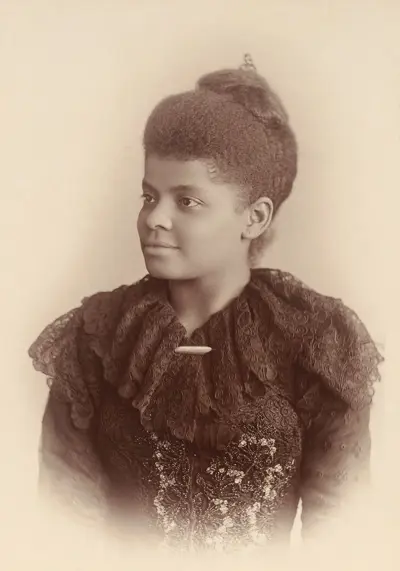
Ida Bell Wells-Barnett was an American investigative journalist, educator, and early leader in the civil rights movement. She was one of the founders of the National Association for the Advancement of Colored People (NAACP). Over the course of a lifetime dedicated to combating prejudice and violence, and the fight for African-American equality, especially that of women, Wells arguably became the most famous Black woman in America.
